
Back to Casa Codorniz, Where Winter Comes Without Snowshoes
There's something mighty satisfying about turning the Subaru westward after another splendid summer in Santa Fe, knowing that somewhere beyond the mountains and the long miles of highway, our winter home is waiting.
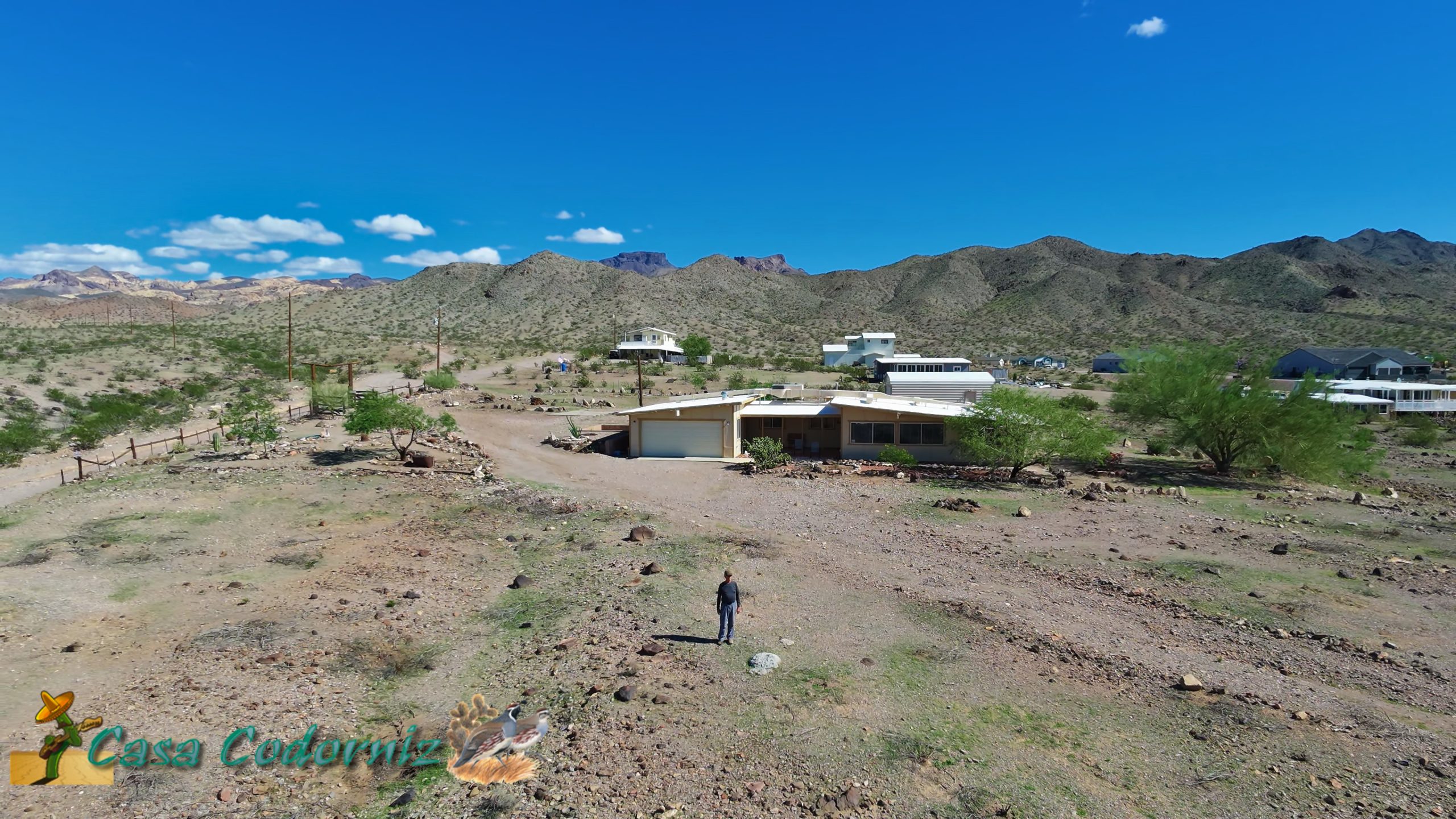
Casa Codorniz.
Our little piece of Arizona desert paradise in the Black Mountains, overlooking Lake Mohave and the Colorado River.
Paulette and I have become what folks affectionately call snowbirds.
We spend our summers in Santa Fe, enjoying the cool mountain mornings, afternoon thunderstorms, changing aspens, and all the wonderful outdoor adventures northern New Mexico offers.
Then, when the nights begin getting colder and winter starts peeking over the Sangre de Cristo Mountains, we head southwest.
Not because we've stopped loving snow.
We've enjoyed more than our share of it.
But after eight decades of living, I've decided that watching snow fall on distant mountains is considerably more enjoyable than shoveling it off the driveway.
Especially when there's a bass boat waiting near Lake Mohave.
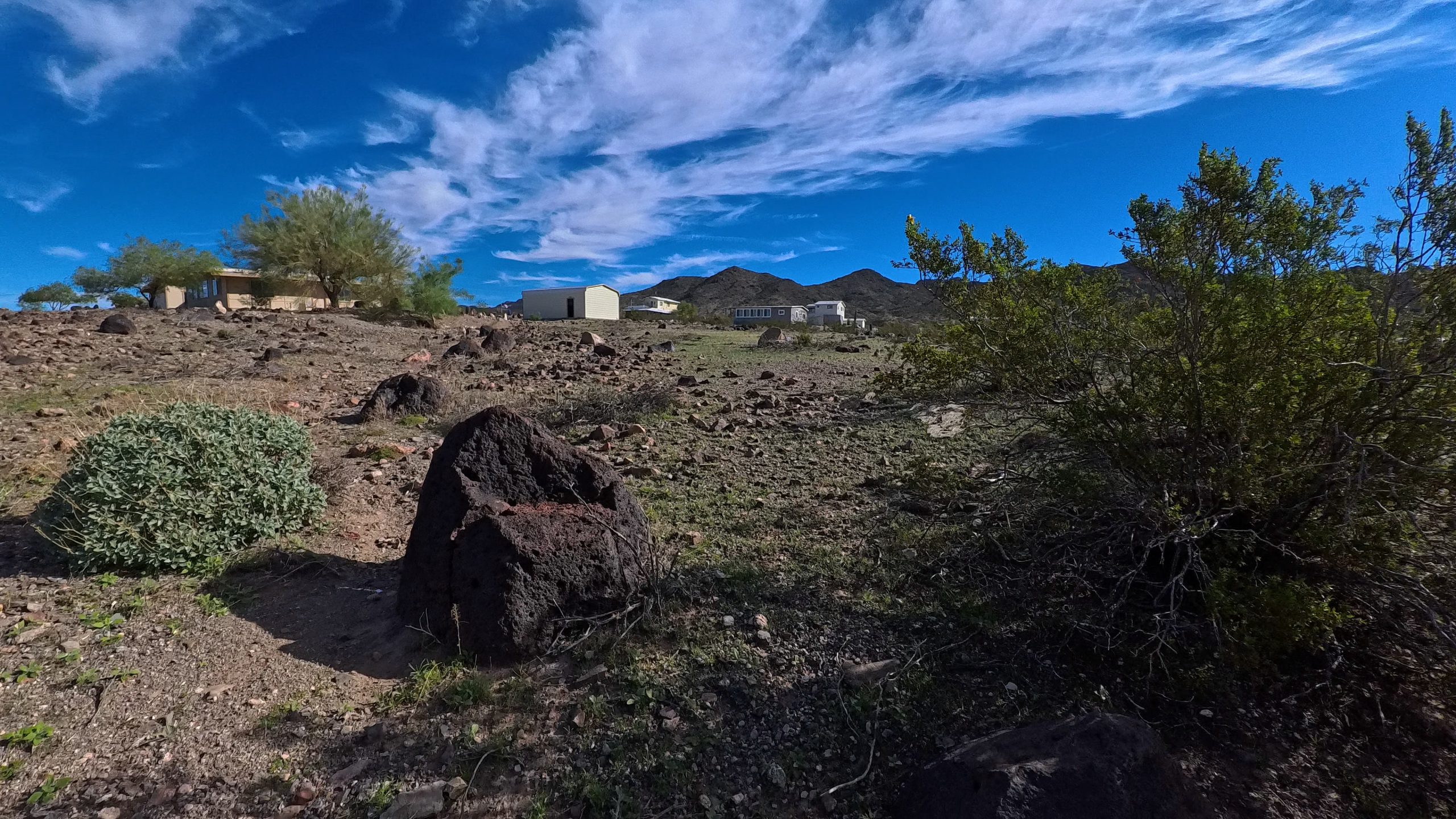
Our winter home, Casa Codorniz, sits high on the eastern slopes of the Black Mountains, above Katherine Landing, with sweeping views of the Colorado River country.
The lake lies roughly five miles west and about 1,700 feet below us.
Beyond the water rises the rugged country surrounding Spirit Mountain, known to the Mojave people as Avi Kwa Ame.
On clear days, the mountains seem to stretch forever.
It's a landscape of creosote bushes, rocky ridges, dry washes, desert wildlife, and sunsets that can stop a fellow in his tracks.
After spending seventeen wonderful years in the log home Paulette and I built at Angel Fire, New Mexico, we never expected to fall quite so completely in love with the desert.
But we did.
And every autumn, when we return to Casa Codorniz, it feels a little like coming home all over again.
Of course, this year's homecoming came with a surprise.
No water.
Not a drop from the faucets.
Welcome back to desert living!
The Return of the Snowbirds, and a Dry Faucet
After arriving at Casa Codorniz, we began our usual routine of opening the house for another winter.
There's always something to do.
Unpack the Subaru.
Check the electrical systems.
Inspect the property.
Make sure the well is operating.
Get the Yamaha Rhino ready for exploring.
And, eventually, find time to sit down and enjoy the view.
Everything was going along reasonably well until we discovered that our water pressure pump had quit.
Now, for those accustomed to city water systems, that might not sound particularly serious.
Call the water department.
Report the problem.
Wait for somebody to fix it.
But out here in the desert, we're the water department.
Our well pumps groundwater into a 2,500-gallon storage tank.
From that tank, a separate pressure pump delivers water to the house.
It's a practical arrangement used on many rural desert properties where municipal water service isn't available.
The well pump lifts water from underground.
The storage tank gives us a reserve.
And the pressure pump supplies the pressure needed for showers, sinks, toilets, and everyday household use.
When that pressure pump stops working, the house can have thousands of gallons of water sitting in the storage tank and still have no usable water pressure.
That's exactly what happened.
We had water.
We just couldn't get it where we needed it.
I suppose that's the desert's way of reminding us that comfort comes with a little responsibility.
Fortunately, I knew exactly whom to call.
Barney Prosser to the Rescue
A couple of years ago, Barney Prosser replaced our well pump.
He's familiar with our system, knows the country, and understands the peculiar challenges of maintaining a private water supply in the Arizona desert.
So when our pressure pump failed, I gave Barney a call.
He ordered a replacement.
Then we waited.
Now, waiting for a pump in the desert is a little different from waiting for a package containing a new camera accessory.
Without running water, everyday conveniences disappear in a hurry.
Cooking becomes complicated.
Washing dishes becomes an exercise in conservation.
And taking a shower becomes something you remember fondly.
Paulette and I have spent enough time camping and exploring remote country to manage without many modern conveniences.
But there's a difference between choosing to camp without running water and discovering that your house has unexpectedly joined the camping fraternity.
After considering our options, I decided there was a sensible solution.
Three nights at Harrah's across the Colorado River in Laughlin, Nevada.
Hot showers.
Comfortable beds.
Restaurants.
And somebody else worrying about the plumbing.
Sounded pretty good to me.
Three Nights at Harrah's Laughlin
Laughlin is an interesting little community along the Nevada side of the Colorado River.
Across the water sits Bullhead City, Arizona.
The two cities share the river, a bridge, and a great many visitors who come to enjoy the desert sunshine, boating, fishing, restaurants, and entertainment.
I booked us three nights at Harrah's Laughlin.
And I must admit, having a dependable hot shower was a wonderful luxury.
Harrah's is a fine hotel, and Laughlin offers plenty of conveniences.
But a hotel room, no matter how comfortable, isn't home.
At Casa Codorniz, we have our familiar surroundings.
Our own kitchen.
Our own bed.
The quail outside.
The mountains.
The enormous desert sky.
And the quiet that settles over the Black Mountains after sunset.
Right on schedule, Barney came through.
The replacement pressure pump arrived, he installed it, and our water system was operating again.
What a relief.
When we returned to Casa Codorniz, I don't believe I've ever appreciated the sound of running water quite so much.
That first shower in our own bathroom was a pleasure.
And sleeping in our own bed was even better.
Our winter season could finally begin.
Why Desert Homes Depend on Water Storage Tanks
Living in the desert teaches a person to think differently about water.
In many cities, water is something that simply appears when you turn a faucet.
Out here, water is something you plan for.
You store it.
You maintain the equipment that delivers it.
You watch how much you use.
And you learn not to take it for granted.
Our 2,500-gallon storage tank is an important part of the Casa Codorniz water system.
It provides a buffer between the well and the house.
The well can refill the tank as needed, while the pressure pump supplies household water.
For rural properties with modest well production or intermittent pumping schedules, storage can make daily living much more practical.
We're fortunate to have a good-producing well.
Many of our neighbors don't have that luxury.
Some rely entirely on water hauled from approved filling stations.
I frequently see neighbors heading out with small water tanks mounted on trailers or secured in pickup beds.
Sometimes I see the same folks making those trips nearly every day.
They fill their portable tanks, return home, and transfer the water into larger storage tanks.
It's part of their normal routine.
Think about that for a moment.
Before washing clothes, preparing dinner, or taking a shower, somebody may have had to drive several miles to get the water.
That's a very different relationship with a basic necessity.
How much does 2,500 gallons of water weigh?
Here's a little arithmetic that illustrates why water hauling requires proper equipment.
FULL STORAGE TANK
20,850 pounds
2,500 gallons × approximately 8.34 pounds per gallon, not including the weight of the tank.
That's more than ten tons of water.
Even a 250-gallon portable tank carries over a ton of water before adding the tank and trailer.
A fellow needs to know his vehicle's load rating, trailer capacity, brakes, and tie-down requirements.
Water doesn't weigh any less just because it's in the desert.
What happens when the power goes out?
Private water systems also depend on electricity unless they're designed with alternative pumping or pressure arrangements.
A power failure can stop both the well pump and the pressure pump.
For that reason, it's sensible to keep drinking water in reserve, maintain the storage tank, and understand how the system can be operated during an emergency.
A backup power system may be worthwhile, provided it's properly sized and safely connected.
And because our water comes from a private well, routine water-quality testing and maintenance are our responsibility.
The lesson is simple.
In the desert, self-reliance isn't a romantic idea.
It's part of the household chores.
From Kansas Cattle Ranches to Arizona Desert Living
Sometimes, while I'm working around Casa Codorniz, I think back to my boyhood on the cattle ranches of the Kansas Flint Hills.
Life was different then.
We had horses to feed.
Cattle to move.
Fences to mend.
Equipment to repair.
And chores that didn't care whether the weather was pleasant.
I learned early that if something needed doing, somebody had to do it.
Usually, that somebody was standing in my boots.
Those lessons have served me well throughout my life.
Whether flying airplanes, operating a construction business, guiding fishermen, or maintaining a house in the desert, I've always appreciated the satisfaction of solving a problem.
There's something comforting about knowing how things work.
And there's something humbling about discovering how many things can stop working.
Our failed pressure pump was a reminder of both.
I couldn't fix everything myself.
But I knew whom to call.
And that's another lesson from ranch country.
Good neighbors and dependable tradespeople are worth their weight in gold.
From the Snowy Mountains of Angel Fire to the Arizona Sunshine
Before settling into our current summer-and-winter arrangement, Paulette and I spent seventeen wonderful years at Casa Oso, the log home we built in the mountains at Angel Fire.
We loved that place.
From our windows, we could look across Moreno Valley toward Wheeler Peak, Bobcat Pass, and Eagle Nest Lake.
The changing seasons were spectacular.
Spring brought the first wildflowers.
Summer filled the mountain meadows with green grass.
Autumn turned the aspens brilliant gold.
And winter transformed the valley into a world of snow-covered forests and mountains.
We watched elk.
Photographed wildlife.
Fished mountain streams.
Hiked forest trails.
And enjoyed the sort of quiet that makes the high country so special.
But winter in the mountains can be demanding.
Snow removal becomes a regular occupation.
Roads turn icy.
Temperatures fall.
And outdoor adventures sometimes require skis, snowshoes, or more layers of clothing than I care to wear.
In 2017, we moved to Santa Fe, where we now enjoy our summers.
And when winter approaches, we migrate southwest.
At Casa Codorniz, the snow shovel gets a vacation.
So do the snowshoes.
Instead of bundling up for a winter hike through deep snow, I can climb into the Yamaha Rhino, head into the desert, or launch the boat on Lake Mohave.
That's a trade I'm happy to make.
Wintering in the Desert at Lake Mead National Recreation Area
Our winter playground is the remarkable Lake Mead National Recreation Area, one of the largest national recreation areas in the United States.
Established in 1964, it protects approximately 1.5 million acres of desert mountains, canyons, shoreline, and Colorado River country in Arizona and Nevada.
Two enormous reservoirs are its best-known attractions.
Lake Mead, formed by Hoover Dam.
And Lake Mohave, formed by Davis Dam.
While Lake Mead receives much of the attention, Lake Mohave has always held a special place in our hearts.
The lake stretches approximately 67 miles between Hoover Dam and Davis Dam, with beautiful clear water bordered by some of the most rugged desert scenery in the Southwest.
Katherine Landing, on the Arizona side, is our nearby gateway to the lake.
From our home above the shoreline, we can enjoy the entire landscape.
The mountains.
The river.
The wildlife.
The ever-changing colors.
And the quiet.
For visitors, the National Park Service provides official Lake Mead National Recreation Area maps and backcountry information, including designated roads and access points around Lake Mohave.
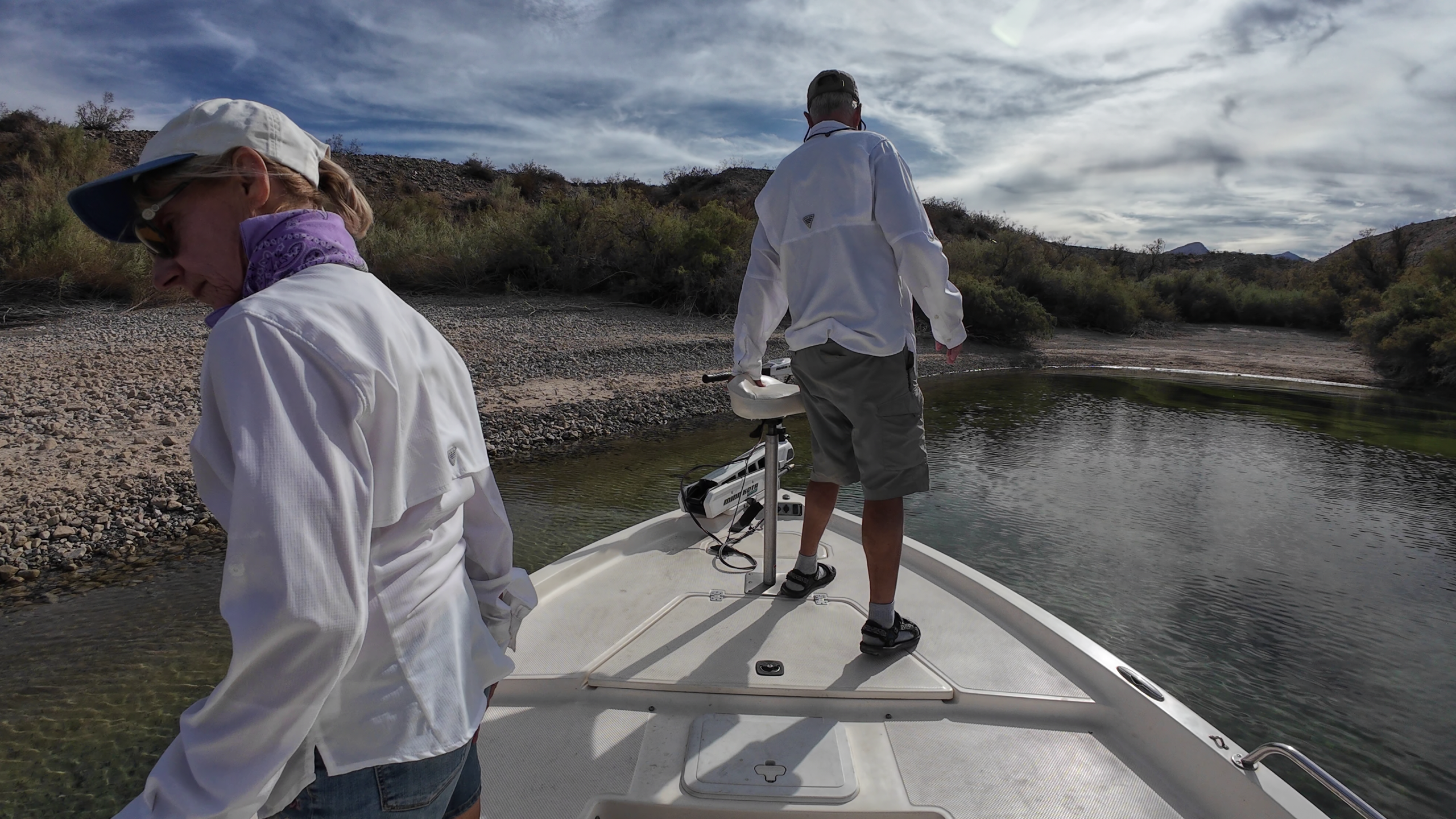
Lake Mohave Fishing: A Wonderful Way to Spend a Winter Morning
I've spent a substantial portion of my life fishing.
During my years as a professional bass guide in Texas, I fished Lake Conroe, Sam Rayburn, Toledo Bend, Lake Texoma, Amistad, Falcon, and numerous other reservoirs.
Those years taught me a great deal about fish behavior.
But they didn't prepare me for the extraordinary clarity of Lake Mohave.
This lake can be absolutely beautiful.
On calm mornings, I can look down into the water and see submerged rock formations, ledges, and sometimes bass holding near the bottom.
It's one of the reasons I enjoy sight fishing here.
Smallmouth Bass in Clear Desert Water
Smallmouth bass are my particular favorites.
They're aggressive.
They're strong.
And they can turn a fishing rod into a wonderfully lively piece of equipment.
During the cooler months, I look for smallmouth around rocky points, submerged ledges, boulder fields, and changes in depth.
When the water is cold, the fish may hold deeper and respond better to slow presentations.
As the water warms toward spring, bass begin using shallower areas more frequently.
That's when sight fishing becomes especially interesting.
In clear water, light fluorocarbon leaders, natural-colored soft plastics, finesse jigs, drop-shot rigs, and small swimbaits can be effective.
I particularly enjoy watching a smallmouth move toward a lure.
Sometimes the fish approaches cautiously.
Sometimes it follows without striking.
And sometimes it grabs the bait with enough enthusiasm to remind me why I've spent so many years fishing.
What Other Fish Live in Lake Mohave?
According to Arizona Game and Fish and National Park Service fisheries information, anglers may encounter smallmouth bass, largemouth bass, striped bass, rainbow trout, channel catfish, and various sunfish.
Fishing opportunities vary with location, season, water temperature, and current conditions.
The Arizona Game and Fish Department publishes fishing reports and lake information, which I recommend checking before a trip.
For current regulations, anglers should also consult the Arizona fishing regulations and the applicable interstate-water rules for Lake Mohave.
I never assume last year's regulations are still in effect.
Winter Fishing Safety
The desert can fool you.
A sunny winter morning may feel pleasantly warm, but the water can be cold enough to make an accidental fall dangerous.
Wind can also arrive quickly.
The long, narrow lake funnels weather through mountain corridors, and conditions can deteriorate rapidly.
I check the forecast, inspect the boat, wear an appropriate life jacket, and keep emergency equipment aboard.
After more than 2,600 hours flying airplanes, I learned to respect weather forecasts.
That habit has served me just as well on the water.
Exploring Desert OHV Trails in My Yamaha Rhino
When I'm not fishing, there's a good chance I'll be exploring the desert in my Yamaha Rhino.
Now, I grew up riding horses.
I still remember moving cattle across the Flint Hills while singing Gene Autry songs to myself.
These days, the Rhino is my desert saddle.
It doesn't require hay, but it does appreciate gasoline, maintenance, and a good set of tires.
The country surrounding Casa Codorniz contains old routes, rocky trails, washes, and mountain overlooks.
Some lead toward historic mining areas.
Others offer beautiful views of Lake Mohave and the Colorado River valley.
I enjoy traveling slowly enough to appreciate the landscape.
A jackrabbit crossing the trail.
A covey of Gambel's quail moving through the creosote.
A raven soaring over a ridge.
Or the tracks of a coyote in a sandy wash.
Those little discoveries are often more memorable than the destination.
Where Can You Legally Ride an OHV Near Lake Mohave?
This is important.
Lake Mead National Recreation Area is not an open OHV playground.
Within the recreation area, motor vehicles are permitted only on approved roads, and vehicles must meet the applicable street-legal requirements. Cross-country driving is prohibited.
The National Park Service marks approved backcountry roads with yellow arrow signs bearing road numbers.
Before taking a Rhino or other side-by-side onto a public route, I recommend checking land ownership, vehicle registration requirements, road legality, and the current route map.
Outside the recreation area, Arizona public lands may offer additional motorized recreation opportunities, but rules depend on the managing agency.
The Arizona Game and Fish Department provides OHV education and information about responsible riding.
I also recommend checking the Bureau of Land Management's travel-management maps for routes on BLM-administered land.
Desert OHV Safety
I don't leave home without checking the Rhino.
Tires.
Oil.
Coolant.
Fuel.
Brakes.
Steering.
And emergency equipment.
I carry drinking water, a first-aid kit, tools, tire repair supplies, communications equipment, and appropriate clothing.
I wear the seat belt and use the vehicle's occupant protection equipment. A properly fitted helmet and eye protection are important safeguards.
Before heading out, I tell Paulette where I'm going.
That's especially important because cellular service can disappear in the mountains.
Desert washes are another concern.
A thunderstorm miles away can send floodwater racing through a dry wash.
The National Park Service warns that backcountry road conditions can change without notice, and visitors should stay on designated routes.
A little preparation can prevent a pleasant afternoon from becoming an expensive rescue.
Exploring Abandoned Mines in the Black Mountains
The Black Mountains have a fascinating mining history.
Prospectors once traveled this country looking for gold, silver, copper, and other minerals.
Their legacy includes abandoned shafts, tunnels, prospect pits, foundations, and old access roads.
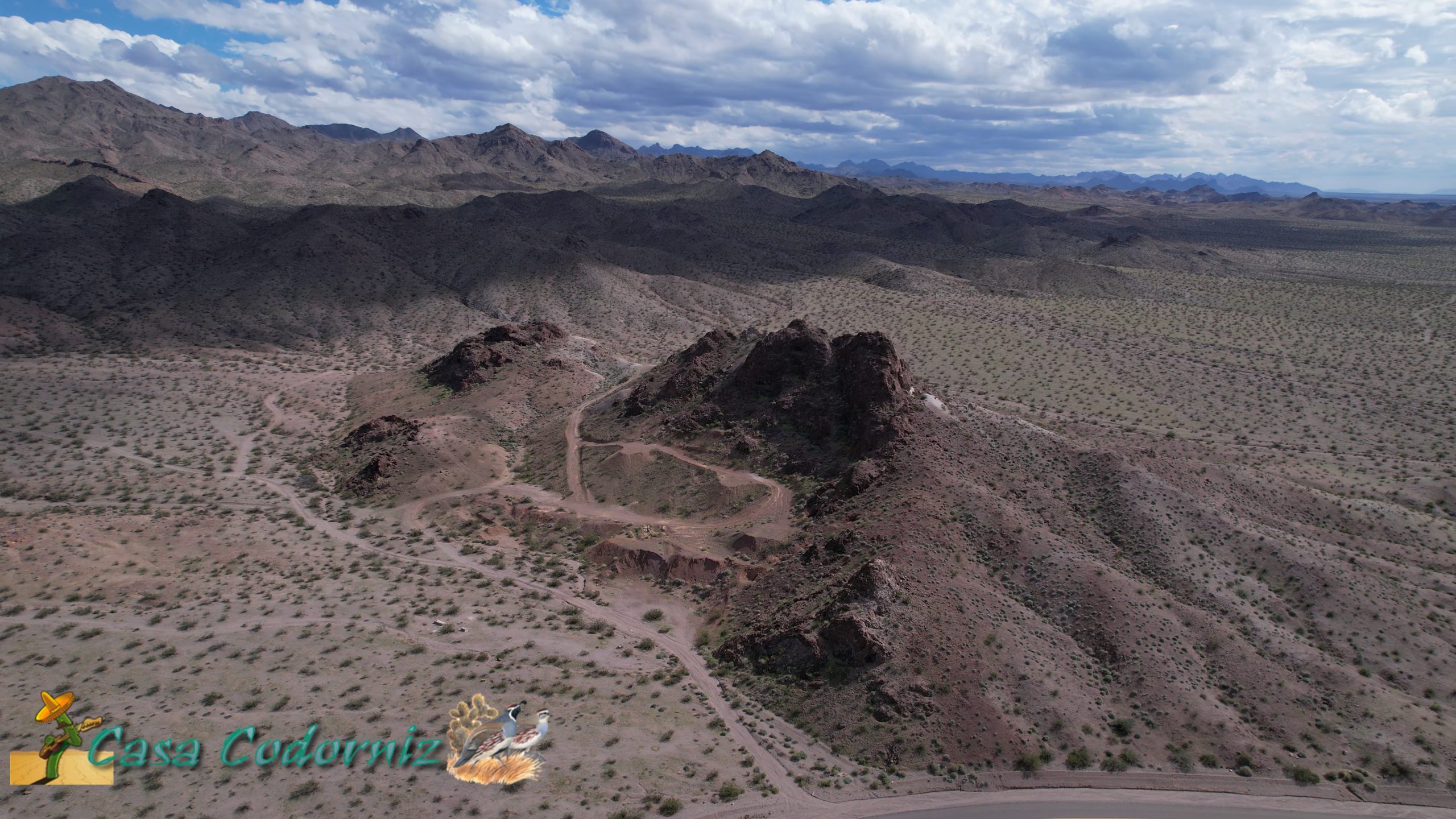
One of my favorite nearby destinations is Old Wagon Trail Mine, roughly a mile southwest of Casa Codorniz.
It's a fascinating place.
Two small mountains, only a few hundred feet high, contain several old mine workings and natural caves.
Most of the mine tunnels extend only a short distance into the rock.
Three deeper workings, extending more than one hundred feet, are now gated.
Years ago, before those gates were installed, I explored the longer tunnels with a flashlight.
I wouldn't recommend repeating that adventure today.
In fact, I consider the gates a welcome safety improvement.
The National Park Service has documented at least 958 abandoned-mining features in Lake Mead National Recreation Area, including shafts, adits, and prospect excavations. Some have been secured to protect visitors and wildlife.
Why Are Abandoned Mines Dangerous?
Old mine tunnels can contain unstable ceilings, hidden shafts, deteriorating timbers, oxygen-deficient air, and hazardous gases.
Even an opening that looks safe from outside may conceal a serious danger.
Never enter a mine tunnel or shaft, bypass a gate, or disturb protective barriers.
The National Park Service abandoned-mine history and safety information explains why these sites should be appreciated from a safe distance.
These days, I'm more interested in photographing the entrances and climbing the surrounding hills for panoramic views.
And what views they are!
From the higher ground around Old Wagon Trail Mine, I can look across Lake Mohave toward Nevada.
To the north, the Colorado River valley stretches into the distance.
On especially clear days, the distant Spring Mountains and Mount Charleston become part of the horizon.
For an old fellow with a camera, that's treasure enough.
Hiking the Desert Mountains Above Katherine Landing
Winter is my favorite season for hiking around Lake Mohave.
The temperatures are generally much more comfortable than summer.
The sun sits lower in the sky.
And the shadows give the rocky landscape wonderful depth.
Unlike the forest trails around Angel Fire, desert hiking often involves rocky slopes, loose gravel, washes, and open terrain.
There may be no shade.
And a route that looks easy from a distance can turn out to be considerably more challenging once you're walking it.
I prefer short hikes with rewarding views.
At eighty-something, I've learned that reaching the summit is only half the adventure.
You still have to get down.
I wear sturdy hiking shoes, carry water, and use a hiking stick when the terrain is loose.
I also keep an eye on the weather.
The National Park Service cautions that desert hiking during the hotter months can be extremely dangerous and recommends careful preparation even during cooler weather.
Where Can Visitors Hike Near Lake Mohave?
The Katherine Landing area offers shoreline walks and access to nearby desert scenery.
Other destinations within the broader recreation area include approved backcountry routes, overlooks, and trails around Willow Beach and Cottonwood Cove.
For a longer outing, visitors can explore the Colorado River Heritage Greenway Park and Trail System near Laughlin and Davis Dam.
The National Park Service describes the Laughlin trail system as extending approximately two miles along the Nevada side of the Colorado River between Davis Dam and Laughlin Bridge.
I always recommend obtaining a current trail map and checking access restrictions before leaving the pavement.
Rockhounding: Discovering the Geology of the Desert
The Black Mountains are a geologist's playground.
Volcanic rocks, mineralized formations, weathered outcroppings, and colorful desert stones reveal a complicated geological history.
I enjoy looking at the rocks as much as I enjoy photographing them.
Sometimes an unusual color or texture catches my attention.
Other times, it's the way erosion has carved a pattern into an exposed hillside.
But there's an important distinction between looking at rocks and collecting them.
Within Lake Mead National Recreation Area, natural and cultural resources are protected, and ordinary recreational rock collecting is generally prohibited without specific authorization.
That includes removing rocks, minerals, fossils, and historic mining artifacts.
Outside the recreation area, some BLM-administered lands may permit limited personal-use collecting, subject to location-specific rules, mineral claims, and other restrictions.
Before collecting anything, verify land ownership and current regulations.
For me, photography is usually the better choice anyway.
A good photograph weighs considerably less than a backpack full of rocks.
And Paulette doesn't have to wonder where I'm going to put another collection.
Birdwatching at Casa Codorniz: The Quail That Named Our Home
Of all the wildlife around Casa Codorniz, Gambel's quail hold a special place in my heart.
In fact, they're the reason we named the house Casa Codorniz.
Codorniz is Spanish for quail.
When we first began spending time here, there were so many of those entertaining little birds around the property that the name seemed perfectly appropriate.
I enjoy watching their daily routines.
The males with their distinctive black face markings and jaunty topknots.
The females keeping watch while feeding.
The entire covey scurrying across the desert, then disappearing beneath a creosote bush.
They have a way of making even an ordinary morning entertaining.
Sometimes I hear them calling before sunrise.
Sometimes they wander past while I'm having coffee.
And sometimes a covey suddenly erupts from the brush while I'm walking around the property.
That will wake a fellow up faster than a second cup of coffee.
What Birds Can You See Around Lake Mohave in Winter?
Winter brings interesting birdwatching opportunities along the Colorado River.
Depending on conditions and location, visitors may encounter American coots, grebes, ducks, mergansers, herons, egrets, cormorants, and various shorebirds.
Raptors also frequent the region.
Red-tailed hawks patrol the desert.
Ravens soar along the ridgelines.
Ospreys hunt over the lake.
And bald eagles may appear during the cooler months.
I particularly enjoy watching birds from a distance with binoculars and a telephoto lens.
That allows me to photograph their natural behavior without disturbing them.
The Arizona Game and Fish Department's wildlife conservation information provides useful background on the state's diverse wildlife and habitat conservation.
Desert Bighorn Sheep and Other Wildlife
The rugged mountains around Lake Mohave also provide habitat for desert bighorn sheep.
They're magnificent animals.
Watching a bighorn negotiate a steep, rocky slope is a reminder that some creatures are considerably better suited to mountain climbing than I am.
Coyotes, bobcats, jackrabbits, desert cottontails, and other mammals inhabit the region.
Reptiles become more active as temperatures warm.
And the small creatures living beneath rocks and shrubs form an important part of the desert ecosystem.
I keep my distance from wildlife and never attempt to feed wild animals.
The goal is to observe them behaving naturally.
Not to persuade them to pose for the camera.
Photographing the Black Mountains and Colorado River
Photography has become one of the great pleasures of my retirement.
I've spent a lifetime enjoying beautiful country, but photography encourages me to look more carefully.
The angle of the sunlight.
The texture of the rocks.
The shadows crossing a mountain.
The changing color of the water.
The way a raven turns its wings against a bright blue sky.
At Casa Codorniz, I don't have to travel far to find something interesting.
Sometimes I photograph the mountains from home.
Sometimes I take the Rhino to a nearby overlook.
Other times, Paulette and I head down toward Lake Mohave.
Why Is Winter Light So Beautiful in the Desert?
During winter, the sun remains lower in the sky.
That creates longer shadows and reveals the textures of the desert mountains.
Early morning sunlight can turn the rocks golden.
Late afternoon often brings warm colors to the hillsides.
And scattered clouds add depth to the landscape.
On particularly clear days, distant mountain ranges appear in remarkable detail.
I enjoy photographing the view toward Spirit Mountain and the rugged country west of Lake Mohave.
Sometimes the entire valley seems washed in soft blue light.
Other times, the mountains glow with warm desert colors.
It's never exactly the same.
Photographing Wildlife Without Disturbing It
I prefer a telephoto lens for wildlife.
That allows me to keep a respectful distance.
I avoid approaching nesting birds, disturbing bighorn sheep, or following animals with a vehicle.
A photograph is never worth stressing wildlife.
I also enjoy recording video of the landscape.
The wind moving through the creosote.
A raven calling from a rocky ridge.
The quail moving through the brush.
Or the quiet movement of clouds across the mountains.
Those are the little moments I want to remember.
What Is the Weather Like When Wintering in the Desert?
One of the greatest advantages of spending winter near Lake Mohave is the climate.
But the desert has seasons, and each brings its own challenges.
Winter: December Through February
Winter is generally pleasant for hiking, fishing, photography, and exploring.
Along the lake, daytime temperatures often reach the upper 50s to upper 60s Fahrenheit, sometimes warmer.
Nights can be chilly.
At our elevation above Katherine Landing, temperatures are often noticeably cooler than along the shoreline.
Frost is possible.
A jacket is welcome during early morning outings.
And strong winds can make a mild day feel considerably colder.
Still, compared with shoveling snow in the mountains, it's a delightful arrangement.
Spring: March Through May
Spring is one of my favorite seasons.
Temperatures gradually warm.
Desert wildflowers may bloom following favorable winter rainfall.
Bird activity increases.
And bass fishing becomes particularly interesting as water temperatures rise.
Spring winds can be strong, however.
I pay close attention to the forecast before heading onto Lake Mohave.
Summer: June Through September
Summer is a different matter entirely.
Temperatures near Lake Mohave frequently exceed 100°F and can climb above 110°F during extreme heat.
The National Park Service reports that June through August temperatures usually exceed 100°F, while May and September often average around 90°F during the day.
That's one reason Paulette and I prefer spending our summers in Santa Fe.
Summer thunderstorms can also create dangerous flash floods in desert washes.
Even a storm miles away can send floodwater rushing through a normally dry channel.
Fall: October and November
Fall is when we return.
The temperatures begin moderating.
The desert becomes comfortable for hiking and OHV excursions.
Migratory birds arrive.
And the lake offers wonderful opportunities for fishing and boating.
It's also the season when we begin getting Casa Codorniz ready for another winter.
Which, as this year's pressure-pump adventure demonstrated, doesn't always go exactly according to plan.
Where Can Visitors Stay Near Katherine Landing and Lake Mohave?
Visitors don't need a private desert home to enjoy wintering in the Lake Mohave region.
There are established campgrounds, RV facilities, motels, and larger hotels nearby.
Here are two convenient choices, including the hotel that rescued our own return this year.
Katherine Landing Lodge and Campground
Katherine Landing is the most convenient developed destination for visitors who want to spend their time on Lake Mohave.
It offers a marina, boat rentals, lodging, camping, dining, and other recreation services.
Address: 2690 E. Katherine Spur Road, Bullhead City, AZ 86429
Telephone: 928-754-3245
Email: frontdesk@goexplorus.com (listed by the lodging reservation provider)
Website: Katherine Landing
The National Park Service lists a 173-site campground and an RV park at Katherine Landing. The campground provides restrooms and showers, while RV spaces have utility hookups. Reservations and applicable park entrance fees should be checked in advance.
Harrah's Laughlin Beach Resort & Casino
Our unexpected home away from home while Barney repaired the pressure pump.
Address: 2900 South Casino Drive, Laughlin, NV 89029
Telephone: 702-298-4600
Toll-free: 800-427-7247
Email: No verified public general reservations email. Use the hotel's official contact or reservation channels.
Website: Harrah's Laughlin
Harrah's offers hotel accommodations, restaurants, and recreational amenities along the Colorado River.
It's a convenient alternative for visitors who prefer hotel comforts while exploring the Lake Mohave area.
Additional Camping Around Lake Mohave
Other developed camping opportunities include Cottonwood Cove and Willow Beach.
Backcountry camping is permitted only under current National Park Service restrictions.
Some areas allow camping along designated backcountry roads, while others prohibit overnight use.
The park's current regulations also establish limits on length of stay, so visitors planning an extended winter visit should review the National Park Service camping rules.
How Do You Get to Katherine Landing at Lake Mohave?
Katherine Landing is reached from Bullhead City, Arizona, via Katherine Spur Road.
For visitors planning a winter escape, these are approximate one-way driving distances to the Katherine Landing area.
|
Starting city |
Approximate distance |
General driving route |
|---|---|---|
|
Albuquerque, NM |
540–570 miles |
I-40 west through Flagstaff to Kingman, then US-93/AZ-68 toward Bullhead City |
|
Santa Fe, NM |
600–630 miles |
I-25 south to Albuquerque, I-40 west to Kingman, then AZ-68 |
|
Las Vegas, NV |
105–115 miles |
US-95 south toward Searchlight, NV-163 east to Laughlin, then across the Colorado River |
|
Phoenix, AZ |
225–245 miles |
US-60 west and US-93 northwest toward Kingman, then AZ-68 |
Distances are planning estimates rather than live route measurements. Actual mileage depends on the starting address and route.
Visitors towing boats or OHV trailers should allow additional time and verify road conditions.
The National Park Service directions and transportation guide provides useful information about park access and entrance requirements.
More Outdoor Adventures From Our New Mexico Years
Although Casa Codorniz has become our winter retreat, northern New Mexico will always have a special place in our hearts.
The adventures Paulette and I enjoyed there helped shape our appreciation for the Southwest.
Our visits to Eagle Nest Lake State Park gave us countless opportunities to fish, photograph wildlife, and enjoy the magnificent Moreno Valley.
Cimarron Canyon State Park remains one of my favorite places for mountain scenery, trout fishing, and forest hikes.
Exploring the Rio Grande Gorge near Taos introduced us to spectacular canyon country, rafting, hiking, and remarkable geological scenery.
Our excursions into the Latir Peak country provided unforgettable opportunities to photograph bighorn sheep and alpine landscapes.
And photographing autumn colors around Angel Fire remains one of the great pleasures of our New Mexico years.
These are all stories that belong together.
Whether we're walking among golden aspens at 10,000 feet or exploring the desert mountains above Lake Mohave, we're enjoying different chapters of the same lifelong adventure.
The mountains change.
The vegetation changes.
The wildlife changes.
But the pleasure of being outdoors remains exactly the same.
Why We Keep Coming Back to Casa Codorniz
Eventually, after the well pump has been repaired, the house is unpacked, and everything is operating again, there's a wonderful moment when I can finally stop working.
I walk outside.
The afternoon sun is beginning to settle toward the mountains.
A few Gambel's quail are moving through the brush.
Somewhere in the distance, a raven calls.
Beyond the desert ridges lies Lake Mohave, its blue water winding through the mountains.
I can see the country where I'll soon be fishing for smallmouth bass.
The trails where I'll be exploring in the Rhino.
The rocky hillsides where I hope to photograph bighorn sheep.
And the quiet places where Paulette and I can sit together and enjoy another beautiful winter afternoon.
I think about the difference between our life here and the conveniences most people take for granted.
We have to maintain our own water system.
Watch our electricity.
Keep the vehicles operating.
Prepare for unexpected repairs.
And plan ahead whenever we venture into remote country.
It isn't always easy.
But then, neither was ranch life in Kansas.
Nor building a log home in the mountains of New Mexico.
Nor running a business.
Nor guiding fishermen across Texas reservoirs in every kind of weather.
I've never expected life to be entirely convenient.
And I suspect that if it were, I'd soon become restless.
There's something satisfying about a life that still requires a little effort.
Especially when the rewards include mountain views, desert wildlife, clear blue water, and winter afternoons warm enough to enjoy without a snow shovel.
A Final Thought About Wintering in the Desert
This year's return to Casa Codorniz began with an unexpected plumbing problem.
For three nights, Paulette and I traded our desert home for a hotel room at Harrah's Laughlin.
And while we appreciated the comfortable accommodations and hot showers, we were delighted when Barney got our water system working again.
It felt wonderful to return home.
To our own bed.
Our own kitchen.
Our own shower.
And our own little corner of the Black Mountains.
At eighty-something, I've come to appreciate those simple comforts more than ever.
But I also appreciate the freedom that comes with wintering in the desert.
The freedom to spend a morning fishing Lake Mohave.
An afternoon exploring an old wagon trail.
A quiet hour photographing Gambel's quail.
Or an entire day doing absolutely nothing except watching the sunlight move across the mountains.
Paulette and I have been fortunate to share more than four decades of adventures.
From the ranch country of my youth to the mountains of New Mexico, the rivers of the Southwest, and now the Arizona desert, life has given us an extraordinary collection of memories.
And we're still making new ones.
As the sun slips toward the mountains beyond Lake Mohave, I look out across the Colorado River valley and smile.
The snowbirds have returned.
The water is running.
The Rhino is waiting.
And somewhere down there in that beautiful blue lake, a smallmouth bass has an appointment with my fishing rod.
Wintering in the desert?
I believe we've found a pretty wonderful way to spend the season.
0 Comments