
There are places we visit, places we remember, and places that somehow become part of who we are.
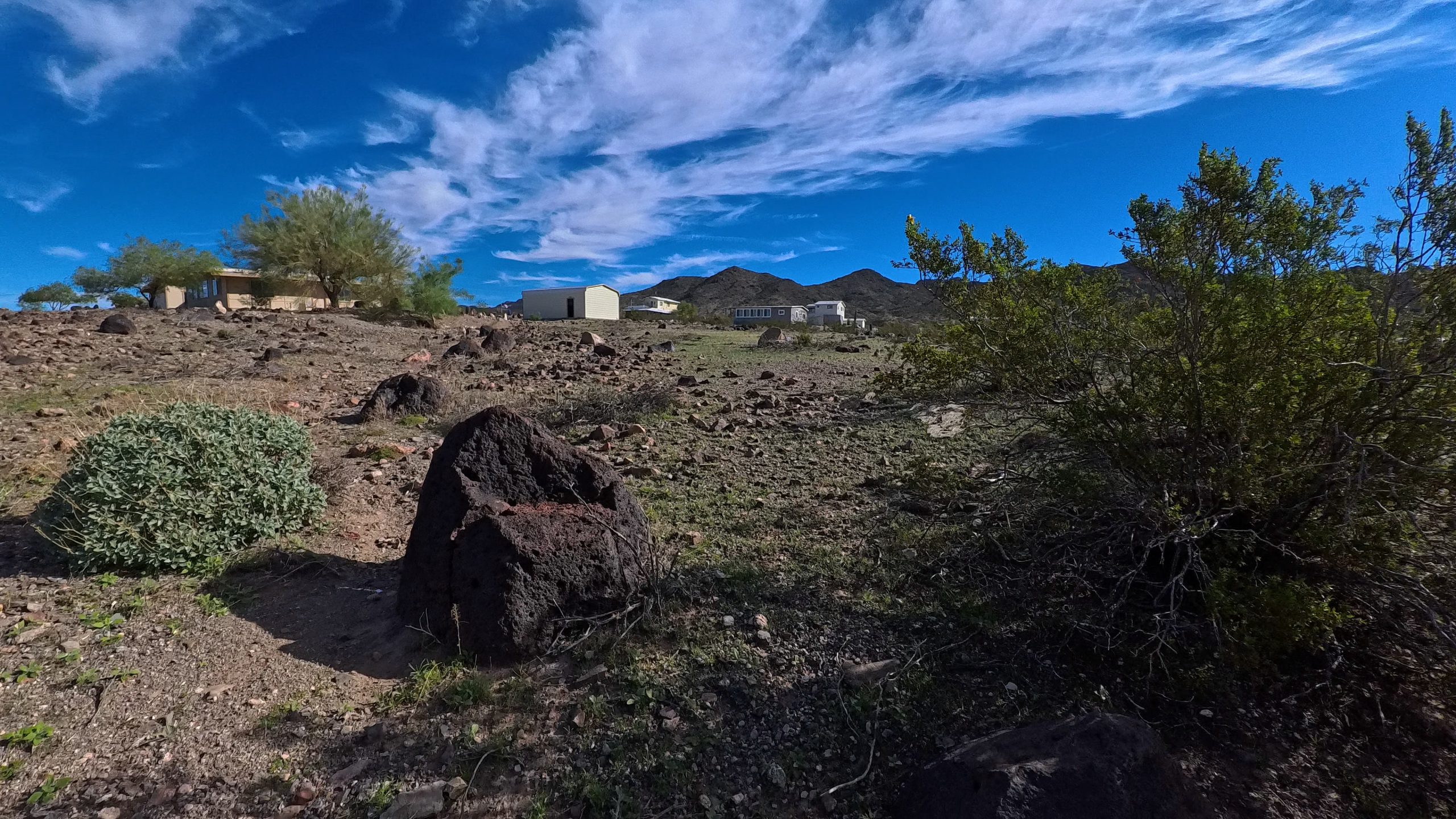
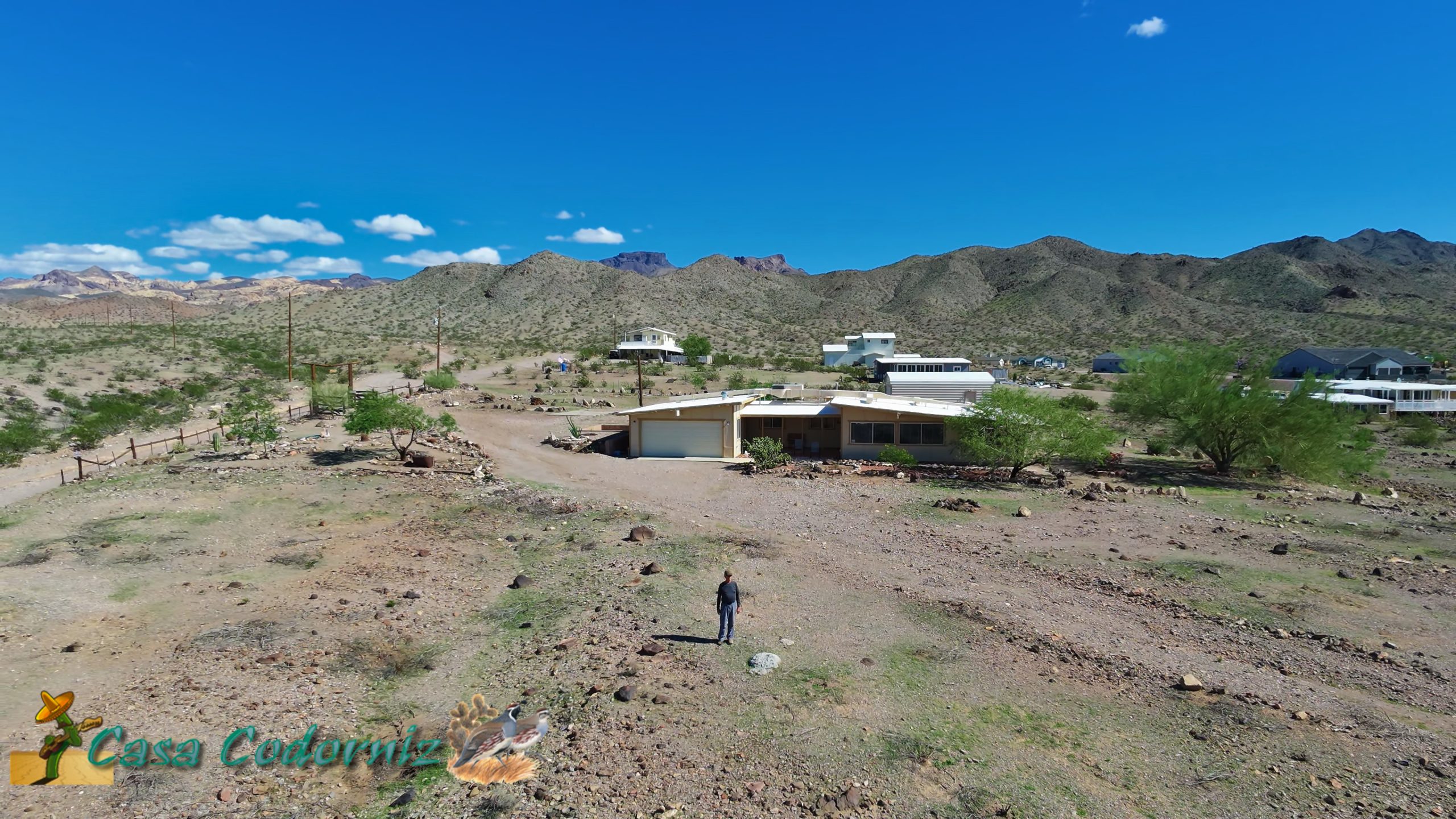
For Paulette and me, our little ranch-style home tucked into the western foothills of Arizona's Black Mountains, overlooking Lake Mohave and Spirit Mountain, has become one of those special places.
Paulette calls it High Chaparral.
I call it Casa Codorniz.
Both names fit, although for entirely different reasons.
Paulette named our property High Chaparral because of its old-fashioned ranch-country character. We even hung a wooden sign with HIGH CHAPARRAL carved into it from our old ranch-style front gate.
My name, Casa Codorniz, translates loosely to House of the Quail.
That seems particularly appropriate because we share our two-and-a-half-acre property with an apparently endless collection of Gambel's quail.
Every morning, little coveys parade through the yard, scratching beneath the creosote bushes, calling to one another, and generally behaving as though they own the place.
Come to think of it, perhaps they do.
Then there are the coyotes.
Every morning.
Every evening.
And frequently during the night.
Their howling carries across the desert foothills, sometimes close enough to make me wonder whether they're conducting their nightly roll call just outside our bedroom window.
And let's not forget the wild burros.
Those four-legged desert landscapers have developed an unfortunate fondness for Paulette's ornamental shrubs.
She plants them.
She waters them.
She nurses them through the desert heat.
And occasionally a wandering burro decides they would make an excellent salad.
Welcome to High Chaparral.
It's not quite the retirement community most folks imagine.
But we wouldn't trade it for one.
How Did We End Up Living by Lake Mohave in the Mohave Desert?
The story really begins with water.
I've been drawn to water for as long as I can remember.
Growing up on cattle ranches in the Kansas Flint Hills, water was something you learned to appreciate early. Later, fishing became a lifelong passion, eventually leading me into professional bass tournaments, guiding, and publishing outdoor sporting magazines.
When Paulette and I built our log home in the mountains of Angel Fire, New Mexico, we enjoyed seventeen wonderful years overlooking the Moreno Valley.
Wheeler Peak rose majestically above the western skyline.
Bobcat Pass lay to the north.
Eagle Nest Lake sparkled below us.
We loved that country.
The elk, deer, black bears, alpine forests, mountain streams, wildflowers, and snow-covered peaks made it an outdoor photographer's paradise.
But there was one problem.
Winter.
Now, don't misunderstand me. Snow-covered mountains are beautiful.
Especially when viewed through a large picture window beside a warm fireplace.
But after enough years of shoveling snow, clearing driveways, and dealing with mountain winters, Paulette and I began imagining something different for our Golden Years.
We wanted sunshine.
Warm winters.
And, naturally, plenty of water.
Our Original Retirement Plan Was Mexico
For years, we had entertained the idea of spending winters in Mexico.
I'd enjoyed fishing several Mexican bass lakes, including El Salto, Comedero, and Oviachic. I appreciated the country's landscapes, fishing opportunities, and warmer climate.
We imagined finding a quiet place where we could enjoy the winter months without snowplows, icy roads, or woodstoves demanding constant attention.
Unfortunately, increasing drug cartel violence in areas we were considering changed our minds.
Mexico remained a country with many beautiful places and wonderful people, but we no longer felt comfortable pursuing our original plans.
So we began looking elsewhere.
South Texas was one possibility.
We visited, explored, and considered what living there might be like.
It didn't take long for us to cross that option off the list.
Nothing particularly wrong with South Texas.
It just wasn't what we were looking for.
We wanted a different combination of desert mountains, clear water, open country, and quiet surroundings.
As it turned out, we would find exactly that in Arizona.
Our 2012 Vacation to Lake Havasu Changed Everything
In the spring of 2012, Paulette and I scheduled a vacation to Lake Havasu City.
I already knew something about the fishing opportunities along the lower Colorado River, and Lake Havasu had a reputation for excellent bass fishing.
We spent time exploring the lake, checking out neighborhoods, visiting businesses, and imagining what it might be like to spend winters there.
We both fell in love with the surrounding country.
The blue water.
The mountains.
The sunshine.
The desert scenery.
But there was one rather substantial drawback.
Lake Havasu was much too busy and noisy for our taste!
We weren't looking for nightlife, crowded streets, or a perpetual parade of noisy high-powered boats.
We wanted somewhere peaceful.
Somewhere we could hear birds in the morning instead of traffic.
Somewhere the mountains and desert would remain the main attractions.
Then, quite by accident, we received the suggestion that changed our lives.
A Tackle Shop Clerk Points Us Toward Lake Mohave
While visiting a tackle shop in Lake Havasu City, we struck up a conversation with the clerk.
Naturally, I asked where he liked to fish.
Without much hesitation, he suggested Lake Mohave.
That caught my attention.
I'd heard of Lake Mohave, of course, but hadn't seriously considered living nearby.
He described the fishing, the clear water, and the quieter surroundings.
That was enough for us.
We climbed into the car and headed north toward Bullhead City.
Sometimes the best travel advice comes from a fellow standing behind a tackle counter.
Discovering Bullhead City and Katherine Landing
We spent several days exploring Lake Mohave, Bullhead City and the surrounding desert.
Across the Colorado River was Laughlin, Nevada, with its casinos, hotels, restaurants, and entertainment.
Bullhead City offered shopping, medical services, groceries, hardware stores, and most of the conveniences we would need.
But the real attraction was north of town.
Katherine Landing Marina on Lake Mohave.
Here was a beautiful lake surrounded by rugged desert mountains, with miles of undeveloped shoreline and clear blue water.
It was considerably closer to the sort of country we had in mind.
We drove the back roads, explored the foothills, and wandered through the desert looking at possibilities.
Then we stumbled upon a small subdivision that seemed almost hidden in the Black Mountain foothills.
Calling its roads streets would have been rather generous.
They were more like Jeep trails.
The homes were scattered.
The desert surrounded everything.
And the views were magnificent.
We drove up and down every road, looking for FOR SALE signs.
We found exactly one.
Later, Paulette called the number.
Unfortunately, the sign advertised a couple of vacant lots down in a wash.
Not exactly our dream location.
We left Bullhead City disappointed.
But we couldn't get that little subdivision out of our minds.
Paulette Finds Our Desert Home on the Internet
Back home, Paulette continued looking.
She's always been remarkably good at tracking down information when something interests her.
One day she discovered a bank-owned property advertised online.
A foreclosure.
The price fit our budget.
The photographs looked promising, although the house obviously needed attention.
Then we looked at the location.
Wouldn't you know it?
It was in the very subdivision we'd fallen in love with!
Of all the places in Arizona.
Of all the neighborhoods around Lake Mohave.
There it was.
Sometimes life has a way of arranging things that no amount of planning could accomplish.
A Little Ranch House That Needed Plenty of Love
The house was a small, two-bedroom, wood-frame ranch-style home built in 1990 by a retired couple.
After the original owners passed away, the property became tied up in a home-equity loan foreclosure.
The bank had left it vacant and uncared for for at least three years.
By the time we found it, the house had been neglected and ransacked.
What few usable appliances had remained were gone.
The place was tired.
Very tired.
But I had spent much of my working life in construction, and Paulette and I had never been particularly frightened by a remodeling project.
We looked beyond the neglected house.
We looked at the land.
The mountains.
The lake.
The solitude.
And the possibilities.
The house could be repaired.
That view couldn't be manufactured.
So we bought it.
High Chaparral: Our Little Island in the Desert
Our home sits on the northeastern corner of a roughly sixty-acre subdivision containing about thirty other homes.
It's an unusual arrangement.
A little island of privately owned property surrounded by the vast public lands of Lake Mead National Recreation Area.
Our property itself covers approximately two and a half acres.
The subdivision lies in the foothills on the western side of the Black Mountains, about five miles from Katherine Landing Marina by our local route.
That proximity to the lake was one of the biggest attractions.
Five miles!
For someone who spent years hauling bass boats across Texas to reach tournament lakes, that seemed almost too good to be true.
And the views were exactly what we wanted.
Two Picture Windows and a Million-Dollar View
Our living room and breakfast bar, where we usually eat, have two large picture windows, each about eight feet wide.
They face west.
Beyond a few neighboring homes, the land drops roughly fifteen hundred feet toward Lake Mohave.
A narrow sliver of blue water is visible in the distance.
Directly beyond it rises Spirit Mountain.
On clear winter afternoons, the mountains change colors as the sun moves west.
Browns become gold.
Gold becomes amber.
Amber becomes purple.
And just before sunset, the desert occasionally puts on a display that makes me forget what I was supposed to be doing.
We have eaten countless meals at that breakfast bar while watching the light change across the mountains.
No restaurant reservation required.
No dress code.
And the view never gets old.
Ninety Miles of Desert Outside Our Bedroom Window
Looking north from our bedroom, there are miles upon miles of open Lake Mead National Recreation Area.
The country stretches toward Lake Mead, roughly ninety miles away as the crow flies across this broad region.
No city skyline.
No subdivision stretching to the horizon.
Just mountains, desert valleys, washes, and open country.
And the remarkable thing is that we can begin exploring it almost as soon as we step outside our front door.
That, more than anything, is why we fell in love with High Chaparral.
Turning an Abandoned House into Casa Codorniz
We didn't remodel everything overnight.
We took our time.
Over the next couple of years, Paulette and I did much of the work ourselves.
New Mexican tile flooring complete with coyote tracks.
Fresh interior paint.
New appliances.
A new roof.
Exterior painting.
Repairs.
Improvements.
And countless little projects that never seem to appear on the original list.
Gradually, the abandoned little ranch house began looking like a home again.
Not a fancy home.
Not a mansion.
Just a comfortable, practical place that suited the way we wanted to live.
Today I think of it as roughing it in style.
We have modern conveniences, comfortable rooms, and those enormous picture windows.
But beyond the walls is genuine desert.
Coyotes still howl.
Quail still parade through the yard.
Wild burros still visit.
And the nearest wilderness is only a few footsteps away.
For us, that's a pretty good arrangement.
This Morning's Walk Around Our Desert Property
Which brings me to this morning.
After our recent rains, remnants of tropical storms that pushed moisture north into the desert, I decided to take a walk around our little two-and-a-half-acre kingdom.
I had two objectives.
First, I wanted to see whether the creosote brush I'd cleared last year had grown back.
Second, I wanted to check on the palo verde trees Paulette had planted.
I started with the trees.
They were thriving!
The recent moisture had done wonders for them.
Palo verde trees are beautifully adapted to the desert. Their green bark can photosynthesize even when their tiny leaves have dropped during dry periods, helping them conserve precious moisture.
After a good soaking rain, they seem to celebrate.
The branches looked healthy, and the trees had responded wonderfully.
Paulette would be pleased.
Then I began inspecting the creosote.
Well, wouldn't you know it?
There were new bushes everywhere.
Not necessarily regrowth from the old root crowns, but plenty of new plants taking advantage of the moisture.
Apparently the desert had decided I needed another exercise program.
At my age, I appreciate opportunities to stay active.
Although I occasionally wish those opportunities involved something less prickly.
As I wandered across the property, Gambel's quail scurried through the brush ahead of me.
A cactus wren called from somewhere nearby.
The mountains stood sharp against the morning sky.
And I thought again about how fortunate Paulette and I were to have found this place.
Not bad for a bank repossession nobody else seemed particularly interested in.
Lake Mead National Recreation Area: Our Enormous Backyard
One of the most extraordinary things about living at High Chaparral is the amount of public land surrounding us.
The Lake Mead National Recreation Area covers approximately 1.5 million acres in Arizona and Nevada.
It includes both Lake Mead and Lake Mohave, along with extensive desert mountains, valleys, shorelines, historic sites, and backcountry roads.
To put that into perspective, our sixty-acre subdivision is a tiny speck surrounded by an immense landscape.
Lake Mead lies to the north.
Lake Mohave stretches through the Colorado River canyon country below Hoover Dam.
And the Black Mountains form a dramatic eastern backdrop to our home.
The recreation area is administered by the National Park Service, which maintains developed campgrounds, marinas, boat ramps, hiking trails, and approved backcountry roads.
For us, it provides something far more valuable than a collection of recreational facilities.
It provides room.
Room to wander.
Room to photograph wildlife.
Room to explore.
And room to sit quietly and appreciate the country.
Lake Mohave: The Reason We Came
Lake Mohave extends roughly 67 miles along the Colorado River between Hoover Dam and Davis Dam.
At normal operating elevations, it covers approximately 28,000 acres, with more than 300 miles of shoreline.
Much of that shoreline remains undeveloped.
The upper lake passes through dramatic canyon country, while the southern portion opens into broad expanses of clear water surrounded by desert mountains.
Katherine Landing, only five miles from our home, provides convenient access to the southern lake.
There are boat ramps, marina facilities, boat rentals, camping, picnic areas, and shoreline access.
For someone who has spent much of his life fishing, it's difficult to imagine a more convenient arrangement.
And Lake Mohave has something I particularly appreciate.
Clear water and smallmouth bass.
Fishing Lake Mohave During Our Winter Months
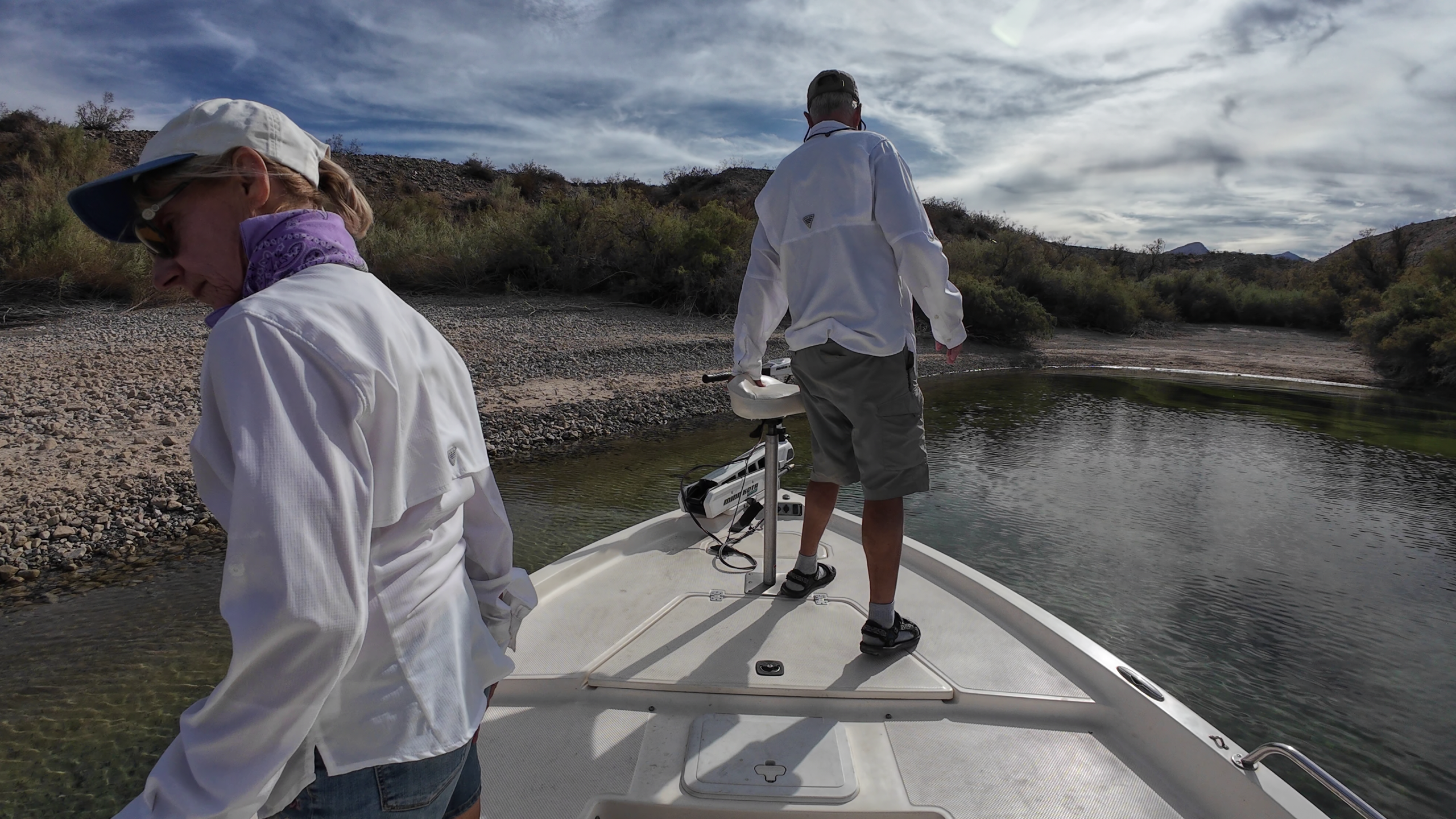
Arizona Game and Fish manages Lake Mohave as an important warmwater fishery, with particular emphasis on largemouth and smallmouth bass, striped bass, and channel catfish. The reservoir also supports native fish conservation efforts involving razorback suckers and bonytail chub.
After decades of fishing Texas reservoirs, I developed a special appreciation for sight-fishing bass in clear water.
Lake Mohave offers exactly that.
Smallmouth Bass: My Favorite Lake Mohave Fish
Smallmouth bass are wonderfully aggressive fish.
They're strong.
They're stubborn.
And they have a habit of making a fellow think he's hooked something considerably larger than he actually has.
During winter, I concentrate on rocky points, ledges, submerged boulders, and steep banks adjacent to deeper water.
As water temperatures begin warming toward spring, smallmouth move toward shallower spawning habitat.
On calm days, Lake Mohave's clear water can allow you to see submerged structure and often the fish themselves.
For finesse fishing, I like a seven-foot medium-light spinning rod with a quality 2500-size reel.
Six- to ten-pound fluorocarbon, or light braid with a fluorocarbon leader, works nicely.
My favorite presentations include small tubes, Ned rigs, finesse worms, drop-shot rigs, and compact crawfish imitations.
Green pumpkin, watermelon, natural shad, and subdued brown colors are dependable choices.
When bass are active, jerkbaits and small swimbaits can be excellent.
The most productive winter fishing often occurs after several stable days of weather, particularly when afternoon sunshine warms shallow rocky areas.
Largemouth Bass Around Cover
Lake Mohave also supports excellent largemouth bass fishing.
I look for submerged vegetation, protected coves, rocky structure, and shoreline cover.
During the prespawn period, largemouth begin moving toward shallower water.
Soft plastics, spinnerbaits, jerkbaits, and swimbaits all have their place.
As the water warms, shallow-water presentations become increasingly productive.
And although I enjoy modern electronics and sophisticated fishing equipment, I've never lost my appreciation for a simple Texas-rigged plastic worm.
Some old methods remain effective because bass haven't figured out how to read advertising.
Striped Bass Fishing
Striped bass are another major Lake Mohave attraction.
Arizona Game and Fish identifies stripers as one of the lake's most popular sport fish.
They roam in schools, often following shad through open water.
Bird activity can help reveal feeding fish.
So can sonar.
I would use medium-heavy spinning or casting tackle with spoons, swimbaits, jerkbaits, or other baitfish imitations.
One important regulation change occurred in 2026: Arizona Game and Fish approved an unlimited daily striped bass bag limit for Lake Mohave and Lake Mead, along with a 25-catfish daily limit, to align with Nevada regulations. Anglers should still verify the current rules and any other applicable requirements before fishing.
Caring for the Fish
After a lifetime of fishing, I have become increasingly conscious of how we handle the fish we release.
I prefer barbless hooks whenever practical.
I use rubber landing nets.
I wet my hands before touching a fish.
I support larger fish properly rather than allowing their full weight to hang vertically from the jaw.
And I try to keep fish in the water as much as possible.
A quick photograph is fine.
A prolonged photo session isn't.
When releasing a tired bass, I support it upright in the water until it can swim away under its own power.
For me, watching a healthy fish disappear into the depths is part of the pleasure of fishing.
Katherine Landing: Five Miles from Our Front Door
Katherine Landing is our nearest developed access to Lake Mohave.
The National Park Service lists its address as 2690 Katherine Spur Road, Bullhead City, Arizona 86429.
Facilities include a boat launch, marina services, fuel, food, camping, and access for smaller watercraft.
Two nearby hiking trails are particularly interesting.
The Lake View Trail is approximately 4.7 miles round trip and passes several scenic coves.
The shorter Fisherman's Trail leads toward Turkey Cove and is less than a mile long.
Both provide opportunities for shoreline photography, birdwatching, and simply enjoying the lake without launching a boat.
I particularly enjoy these areas during the cooler months, when the sun is pleasant rather than punishing.
Exploring the Black Mountains and Desert Backcountry
Fishing may have brought us to Lake Mohave, but the desert keeps us entertained when we're not on the water.
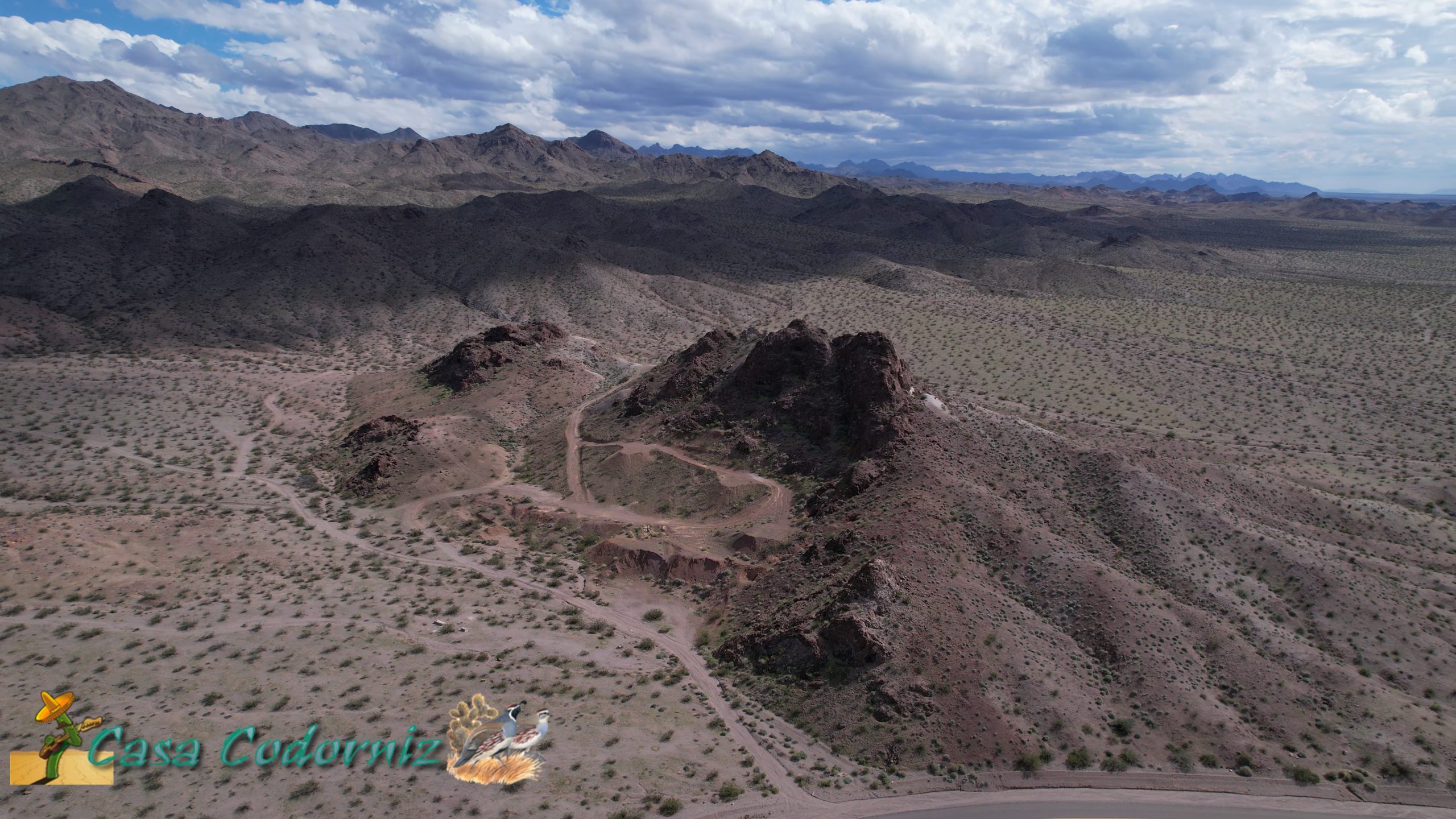
The Black Mountains are rugged, beautiful, and filled with geological and historical interest.
Old mining roads wind through the foothills.
Dry washes cut through rocky slopes.
Ancient volcanic formations rise above broad desert valleys.
And the colors change dramatically throughout the day.
Early morning is especially beautiful.
Low sunlight brings out the textures in the rocks.
Long shadows define ridges and washes.
And the desert vegetation glows in soft golden light.
For photography, it's difficult to ask for better conditions.
OHV Trails and Backcountry Roads
The Lake Mohave region offers extensive opportunities for exploring by Jeep, four-wheel-drive vehicle, and properly equipped off-highway vehicles.
But there's an important distinction between nearby public lands.
Within Lake Mead National Recreation Area, motor vehicles must remain on approved roads, identified by numbered yellow-arrow markers. Cross-country driving, creating new tracks, and driving in unapproved washes are prohibited. Vehicles must meet applicable road-use requirements.
Nearby Bureau of Land Management areas may have different designated OHV opportunities and vehicle requirements.
I always recommend checking the current land-management map before heading into unfamiliar country.
A trail appearing on a GPS screen doesn't necessarily mean it's legal to drive.
My Rules for Desert Trail Riding
Desert travel is wonderfully rewarding, but it deserves respect.
I carry more drinking water than I expect to need, extra food, a first-aid kit, tire repair supplies, a spare tire, basic tools, and recovery equipment.
A reliable map or downloaded offline navigation system is essential.
Cell service disappears quickly in remote canyons.
I also let someone know where I'm going and when I expect to return.
When possible, traveling with another vehicle is preferable.
A breakdown five miles from town is an inconvenience.
A breakdown twenty miles into the desert without communications can become something considerably more serious.
And never underestimate flash floods.
A wash that has been dry for months can become a raging stream after a thunderstorm miles away.
The National Park Service specifically warns visitors about sudden flooding and lightning during summer monsoon weather.
Old Abandoned Mines: Fascinating History, Serious Danger
The Black Mountains and surrounding desert contain reminders of Arizona's mining history.
Old prospect pits, mine shafts, abandoned equipment, and weathered foundations can be found throughout the region.
As someone who enjoys history and photography, I find these places fascinating.
An old ore chute silhouetted against the mountains can make a wonderful photograph.
So can a weathered mining cabin or rusting piece of machinery.
But I draw a firm line at entering abandoned mines.
The National Park Service documents hundreds of abandoned mining features within Lake Mead National Recreation Area, including vertical shafts, inclined shafts, prospects, and old structures.
These sites can contain unstable ground, hidden vertical drops, rotting timbers, toxic gases, and dangerously low oxygen levels.
The historic Katherine Mine and Mill site near Katherine Landing is specifically closed to public entry because of unstable ground and other hazards.
My approach is simple.
Photograph old mines from a safe distance.
Never enter shafts or tunnels.
Never walk onto old timbers covering an opening.
Never climb abandoned structures.
And never assume a mine is safe because someone else has been inside.
A good photograph isn't worth a rescue operation.
Rockhounding in the Mohave Desert
Another pleasure of exploring this country is its geology.
The surrounding mountains contain volcanic rocks, quartz veins, iron-stained formations, and colorful desert stones.
Rockhounding can be enjoyable on public lands where collecting is specifically permitted.
However, collecting rocks, minerals, fossils, or historical artifacts is generally prohibited within National Park Service lands, including Lake Mead National Recreation Area, without specific authorization.
For recreational collecting, I would investigate appropriate BLM-managed areas outside the recreation area and check the local field office's regulations, mining claims, and land status before removing anything.
Private mining claims and protected archaeological sites deserve particular respect.
Sometimes the best rock collection is a collection of photographs.
Wildlife Around Casa Codorniz: Our Desert Neighbors
One of the greatest pleasures of living at High Chaparral is discovering just how much wildlife inhabits this seemingly dry and inhospitable landscape.
The desert isn't empty.
It simply operates on a different schedule than the mountains.
Animals conserve energy.
Many avoid the hottest parts of the day.
Others emerge after sunset.
And after a good rain, the entire desert seems to wake up.
Gambel's Quail: The Real Owners of Casa Codorniz
Callipepla gambelii
Of all the wildlife around our home, Gambel's quail have become my favorites.
They're handsome little birds, with their distinctive forward-curving topknots, patterned plumage, and wonderfully entertaining personalities.
Arizona Game and Fish identifies Gambel's quail as characteristic residents of the Sonoran and Mojave desert regions, where they inhabit desert washes, brushy slopes, and vegetation providing food and protective cover.
They travel in coveys.
They communicate constantly.
And when something alarms them, they can disappear into the brush with remarkable speed.
I particularly enjoy watching the little families with their young chicks.
The adults seem to have a system for keeping everyone together, although occasionally one youngster gets distracted and must hurry to catch up.
They remind me of a family outing with a dozen children and no assigned seating.
Our property provides plenty of suitable cover.
Creosote bushes.
Palo verde trees.
Scattered shrubs.
And natural desert vegetation.
The quail take full advantage.
That's why Casa Codorniz seems a more appropriate name than any grand Spanish estate title I might have invented.
It's their home.
We just happen to pay the property taxes.
Coyotes: Our Nightly Desert Chorus
Coyotes are another constant presence.
Their calls begin around dusk, continue intermittently through the night, and often greet us again before sunrise.
Sometimes a single coyote begins howling.
Then another answers.
Then several join in.
Within seconds, it sounds as though half the desert has gathered for a convention.
The remarkable thing about coyotes is how misleading their voices can be.
A few animals can sound like a much larger gathering.
Their yips, barks, and howls carry tremendous distances through the still desert air.
I enjoy listening to them.
They are part of the landscape.
But I also respect them as wild predators and never encourage them to approach the house.
Wild Burros: Paulette's Uninvited Gardeners
Then there are the burros.
Wild burros have become a familiar sight around the Lake Mohave region.
They're descendants of domestic animals brought into the Southwest during earlier mining, ranching, and transportation periods.
Today, free-roaming burros inhabit portions of the surrounding desert.
They're interesting animals to photograph.
Intelligent.
Curious.
Surprisingly surefooted.
And absolutely convinced that anything green in Paulette's yard was planted for their personal benefit.
We enjoy seeing them.
We just wish they'd develop a preference for the creosote bushes I'm trying to get rid of.
Wild burros should never be fed or approached closely. They can bite, kick, and behave unpredictably, particularly when protecting young animals.
And although they appear tame around populated areas, they remain powerful animals deserving plenty of space.
Other Desert Wildlife
Around Lake Mohave and the Black Mountains, wildlife observers may encounter desert cottontails, black-tailed jackrabbits, coyotes, kit foxes, bobcats, desert bighorn sheep, lizards, snakes, and numerous species of birds.
Desert bighorn sheep are particularly interesting to me. We see them occasionally.
They navigate steep, rocky terrain with a confidence that makes a mountain goat look almost cautious.
For wildlife photography, I prefer a long telephoto lens and enough distance to avoid disturbing the animals.
The Arizona Game and Fish Department provides wildlife identification, habitat information, and conservation guidance for the region.
Birdwatching and Desert Photography
Our winter home is wonderfully situated for birdwatching.
Gambel's quail provide daily entertainment, but they are only the beginning.
Depending upon habitat and season, birds in the region include cactus wrens, curve-billed thrashers, black-throated sparrows, phainopeplas, roadrunners, ravens, red-tailed hawks, American kestrels, and several hummingbird species.
Near Lake Mohave, waterbirds add another dimension.
Great blue herons.
Egrets.
Cormorants.
Ospreys.
Ducks.
And occasional bald eagles during the cooler months.
Early mornings are particularly productive.
The air is cool.
Birds are active.
And the low sunlight produces beautiful photographic conditions.
For me, wildlife photography is as much about observation as equipment.
Watch where birds perch.
Learn their feeding habits.
Notice how they respond to changes in weather.
And be patient.
Sometimes the best photograph comes after you've stopped trying so hard to get one.
Our years photographing wildlife in the Sangre de Cristo Mountains taught us that lesson repeatedly. I still enjoy revisiting those memories through my article on Eagle Nest Lake State Park fishing, hiking, and wildlife.
The landscape has changed from alpine forests to desert foothills, but the pleasure of observing wildlife remains exactly the same.
Hiking Around Lake Mohave
Hiking is one of our favorite ways to explore the country around High Chaparral.
During the cooler months, the desert provides almost endless opportunities.
There are established trails near Katherine Landing, along with approved backcountry roads and natural areas suitable for exploring on foot.
The landscape is especially beautiful after rainfall.
Desert plants become greener.
Wildflowers may appear.
And the mountains develop colors and textures that are almost invisible during the harsh light of summer.
I enjoy short hikes into the foothills, where I can stop frequently to photograph plants, birds, geological formations, and distant mountain views.
At my age, I have become increasingly comfortable with the idea that a hike doesn't need to be a race.
There is no prize for reaching the end of a trail without noticing what was growing beside it.
For readers who enjoy mountain hiking as well as desert exploration, my Rio Chama Basin headwaters hiking and trout fishing adventure offers a very different New Mexico landscape.
Desert Hiking Safety
Even during winter, desert hiking requires preparation.
Carry water.
Wear sturdy footwear.
Protect yourself from the sun.
Watch where you place your hands and feet.
Avoid reaching beneath rocks or into crevices where snakes or other animals may be sheltering.
And never enter a narrow canyon or wash when thunderstorms threaten.
During summer, temperatures can become life-threatening.
The National Park Service implements seasonal closures on several strenuous trails because of extreme heat. Its 2026 seasonal restrictions ran from May 15 through September 30, with additional closures possible during unusually hot conditions.
For Paulette and me, winter is the season for desert hiking.
Summer is when we prefer the high country of New Mexico.
That arrangement suits us perfectly.
The Four Seasons at High Chaparral
Winter: Why We Came
December through February is the reason we bought Casa Codorniz.
Daytime temperatures around Bullhead City commonly range from the upper 50s into the 70s, although occasional cold fronts bring chilly mornings and cooler afternoons.
Snow is unusual at our elevation.
Sunshine is abundant.
And outdoor activities are generally comfortable throughout much of the day.
This is when I particularly enjoy fishing Lake Mohave, hiking desert trails, and photographing wildlife.
While northern New Mexico is dealing with snow and freezing temperatures, we're often sitting at our breakfast bar watching sunlight creep across Spirit Mountain.
I consider that a very satisfactory retirement arrangement.
Spring: The Desert Comes Alive
March through May brings warming temperatures and, following favorable winter rains, desert wildflowers.
Palo verde trees may burst into yellow bloom.
Cacti begin flowering.
Birds become increasingly active.
And the fishing can be excellent as bass move toward shallow spawning habitat.
Spring also brings wind.
Lake Mohave can become rough quickly, particularly when strong winds funnel through the surrounding mountains.
I check forecasts carefully before launching a boat.
Summer: The Desert Takes Command
June through September is another matter entirely.
Bullhead City regularly experiences summer temperatures exceeding 105°F, with occasional afternoons above 115°F.
That is not weather I care to challenge unnecessarily.
The desert is beautiful in summer, but the heat deserves considerable respect.
Monsoon thunderstorms can arrive during July, August, and September, sometimes producing intense localized rainfall.
Those storms can transform dry washes into dangerous torrents.
Fortunately, our seasonal lifestyle allows us to spend much of the summer in Santa Fe.
There we can enjoy the mountains, forests, hiking trails, and cooler elevations.
I still appreciate our northern New Mexico fishing country, including the beautiful public trout waters described in my Rio Chama Basin public fishing access guide.
Autumn: The Snowbirds Return
October and November bring one of my favorite transitions.
Temperatures moderate.
The desert becomes comfortable again.
And the snowbirds begin returning to their winter homes.
That includes us.
After enjoying our Santa Fe summer, we pack up and head west toward Lake Mohave.
It's a familiar journey now.
And there is always a little excitement as we approach Bullhead City and begin climbing toward High Chaparral.
We wonder what the summer storms have done.
Whether the shrubs survived.
Whether the burros have eaten anything else.
And whether the quail are still occupying their usual territory.
So far, the quail have never disappointed us.
Bullhead City and Laughlin: Civilization When We Need It
One of the advantages of our location is that we can enjoy a quiet desert lifestyle without being completely isolated.
Bullhead City provides grocery stores, restaurants, medical facilities, shopping, boat services, tackle shops, and other necessities.
Across the Colorado River, Laughlin offers casinos, hotels, restaurants, entertainment, and riverfront walking opportunities.
We enjoy visiting both communities.
But after spending time among traffic and crowds, it's always pleasant to return to our little place in the foothills.
The difference is remarkable.
Within a relatively short fifteen minute drive, we leave busy commercial streets behind and find ourselves surrounded by desert again.
That combination of convenience and solitude was exactly what we were searching for in 2012.
Where Can Visitors Stay Near Lake Mohave?
For friends and readers planning a visit, Bullhead City, Laughlin, and Katherine Landing offer several convenient lodging choices.
The following are established options with published contact information. Reservations, amenities, and availability should be confirmed directly.
Katherine Landing Campground and Marina
Address: 2690 Katherine Spur Road, Bullhead City, AZ 86429
Phone: 928-754-3245
Website: National Park Service Katherine Landing
Email: No verified public lodging email available.
Katherine Landing is the closest developed overnight recreation area to our winter neighborhood. It offers campground facilities, marina services, boat launching, and convenient access to Lake Mohave.
The National Park Service campground offers sites without hookups, while concession-operated facilities provide additional RV options.
Holiday Inn Express & Suites Bullhead City
Address: 1300 Silver Creek Road, Bullhead City, AZ 86442
Phone: 928-538-7200
Email: bullheadcityhie@gmail.com
Website: Holiday Inn Express Bullhead City
A comfortable hotel option with breakfast, parking, and convenient access to Bullhead City and Laughlin.
Sun Valley Suites
Address: 336 Lee Avenue, Bullhead City, AZ 86429
Phone: 928-754-1110
Email: sunvalleysuites@yahoo.com
Website: Sun Valley Suites
This property advertises parking suitable for trucks, trailers, and boats, which can be particularly useful for visiting fishermen.
Aquarius Casino Resort, Laughlin
Address: 1900 South Casino Drive, Laughlin, NV 89029
Phone: 702-298-5173
Email: aqgeneralinquiries@goldenent.com
Website: Aquarius Casino Resort
Located on the Nevada side of the Colorado River, Aquarius provides an alternative for visitors who enjoy restaurants, entertainment, and casino-resort accommodations.
Golden Nugget Laughlin
Address: 2300 South Casino Drive, Laughlin, NV 89029
Phone: 702-298-7111
Email: guestservicesgnlaughlin@goldennugget.com
Website: Golden Nugget Laughlin
Another riverfront lodging choice with access to Laughlin's dining and entertainment.
Getting to Lake Mohave and High Chaparral
Bullhead City and Katherine Landing are convenient destinations for travelers from New Mexico, Nevada, and Arizona.
Driving distances below are approximate highway distances to Bullhead City. Katherine Landing is a further drive north of the main commercial areas of town.
From Santa Fe, New Mexico
Distance: Approximately 570–600 miles
Driving time: Around 9–10 hours, depending on stops and traffic.
Our usual western travel corridor follows Interstate 40 through Albuquerque, Gallup, and Flagstaff toward Kingman, Arizona.
From Kingman, US Highway 93 and Arizona Highway 68 lead toward Bullhead City.
It's a long day's drive, but one we've come to know very well.
From Albuquerque, New Mexico
Distance: Approximately 510–540 miles
Driving time: Around 8–9 hours.
Follow Interstate 40 west through Gallup, Holbrook, Flagstaff, and Kingman.
From Kingman, continue toward Bullhead City via Highway 68.
From Las Vegas, Nevada
Distance: Approximately 100–115 miles
Driving time: Around 1¾–2¼ hours.
Travel south on US Highway 95 toward Searchlight, then continue toward Laughlin and Bullhead City.
Depending on the destination, Nevada Highway 163 provides access to Laughlin.
From Phoenix, Arizona
Distance: Approximately 220–240 miles
Driving time: Around 3¾–4½ hours.
A common route follows US Highway 60 northwest toward Wickenburg, then US Highway 93 toward Kingman, followed by Highway 68 into Bullhead City.
Always check current road conditions before departing, especially during winter storms in northern Arizona or summer monsoon periods.
What Makes Living by Lake Mohave in the Mohave Desert So Special?
People occasionally ask what we like most about living here.
The fishing?
Certainly.
The sunshine?
Absolutely.
The desert scenery?
Without question.
But I think the real answer is something less tangible.
It's the freedom to enjoy the outdoors without needing to plan an elaborate expedition.
If I want to photograph quail, I can step outside.
If I want to hike, the desert is just beyond our property.
If I want to fish, Katherine Landing is only five miles away.
If I want to watch a sunset, I can sit at our breakfast bar.
And if I want to do absolutely nothing, the view provides plenty of entertainment.
There is also something deeply satisfying about living in a home we restored ourselves.
Every room reminds us of work we accomplished together.
Every improvement carries a memory.
The tile floors.
The new roof.
The paint.
The landscaping.
The wooden High Chaparral sign.
None of it happened overnight.
We built our winter retreat gradually, one project at a time.
In that respect, it reminds me of our log home in Angel Fire.
Different materials.
Different climate.
Different landscape.
But the same satisfaction of making a place our own.
The Desert Has Its Own Kind of Beauty
I sometimes think people misunderstand deserts because they expect them to behave like forests.
A forest announces its beauty.
Tall trees.
Green vegetation.
Running streams.
Wildflowers.
Wildlife moving through the shadows.
A desert requires a little more patience.
You have to notice the smaller things.
The intricate structure of a creosote blossom.
The delicate yellow flowers of a palo verde.
The tracks of a coyote crossing a wash.
The way morning sunlight illuminates a distant ridge.
The soft calls of quail moving through the brush.
The sudden appearance of wildflowers after a rare soaking rain.
The desert doesn't reveal everything at once.
And perhaps that's why I enjoy photographing it so much.
After spending years exploring the mountains of northern New Mexico, I have come to appreciate the remarkable contrast between our two homes.
One surrounded by forests and high mountains.
The other surrounded by desert mountains and open country.
Both beautiful.
Both filled with wildlife.
Both offering opportunities to explore.
And both places where Paulette and I feel very much at home.
Readers who share our love of northern New Mexico's traditional mountain landscapes may also enjoy my guide to drivable New Mexico alpine lakes, a reminder of the very different scenery awaiting us when summer returns.
Another Morning at Casa Codorniz
By the time I finished walking our property this morning, the sun had climbed well above the Black Mountains.
The palo verde trees were looking good.
The quail had apparently completed their morning inspection.
And I'd discovered enough new creosote bushes to keep myself occupied for several afternoons.
I stood for a while looking west toward Lake Mohave.
The narrow strip of blue water shimmered in the distance.
Spirit Mountain rose beyond it.
A few scattered clouds drifted across an otherwise clear sky.
Somewhere down the slope, a coyote began calling.
I could hear a few quail answering one another from the brush.
And I thought about that spring vacation back in 2012.
We had driven to Lake Havasu hoping to find somewhere to spend our winters.
We hadn't found it.
At least not there.
Then a tackle shop clerk suggested Lake Mohave.
We followed his advice.
Discovered Bullhead City.
Found a little subdivision hidden in the desert.
Drove around looking for property.
Found nothing suitable.
Went home disappointed.
And then Paulette discovered an abandoned house on the internet.
The very house we now call home.
It's remarkable how life's little detours sometimes lead us exactly where we belong.
High Chaparral, Casa Codorniz, and Our Golden Years
I suppose there are more conventional ways to spend one's Golden Years.
Some folks prefer golf courses.
Others enjoy retirement communities, organized activities, and neighbors close enough to borrow a cup of sugar.
Paulette and I seem to have taken a different road.
We spend our summers in the beautiful high country of northern New Mexico.
When winter approaches, we head for the warm desert along Lake Mohave.
We trade ponderosa pines for palo verde trees.
Elk for burros.
Mountain bluebirds for Gambel's quail.
Snow-covered peaks for sunlit desert mountains.
And cold mountain lakes for the clear blue water of Lake Mohave.
We have two very different worlds to enjoy.
And after all these years together, we still find new things to explore in both.
As I headed back toward the house this morning, I took one last look at the creosote bushes that had sprouted since last year.
Plenty of work ahead.
I suppose I could complain.
But then I looked toward the lake.
The mountains.
The enormous open desert.
And our little ranch house sitting comfortably beneath the Arizona sunshine.
I smiled.
Not bad for an old Kansas ranch boy and his sweetheart.
Not bad at all.
Welcome to High Chaparral.
Or, as I prefer to call it, Casa Codorniz.
Our little piece of paradise in the Mohave Desert.
And if you'll excuse me, I have a few creosote bushes to remove.
Again.
0 Comments