
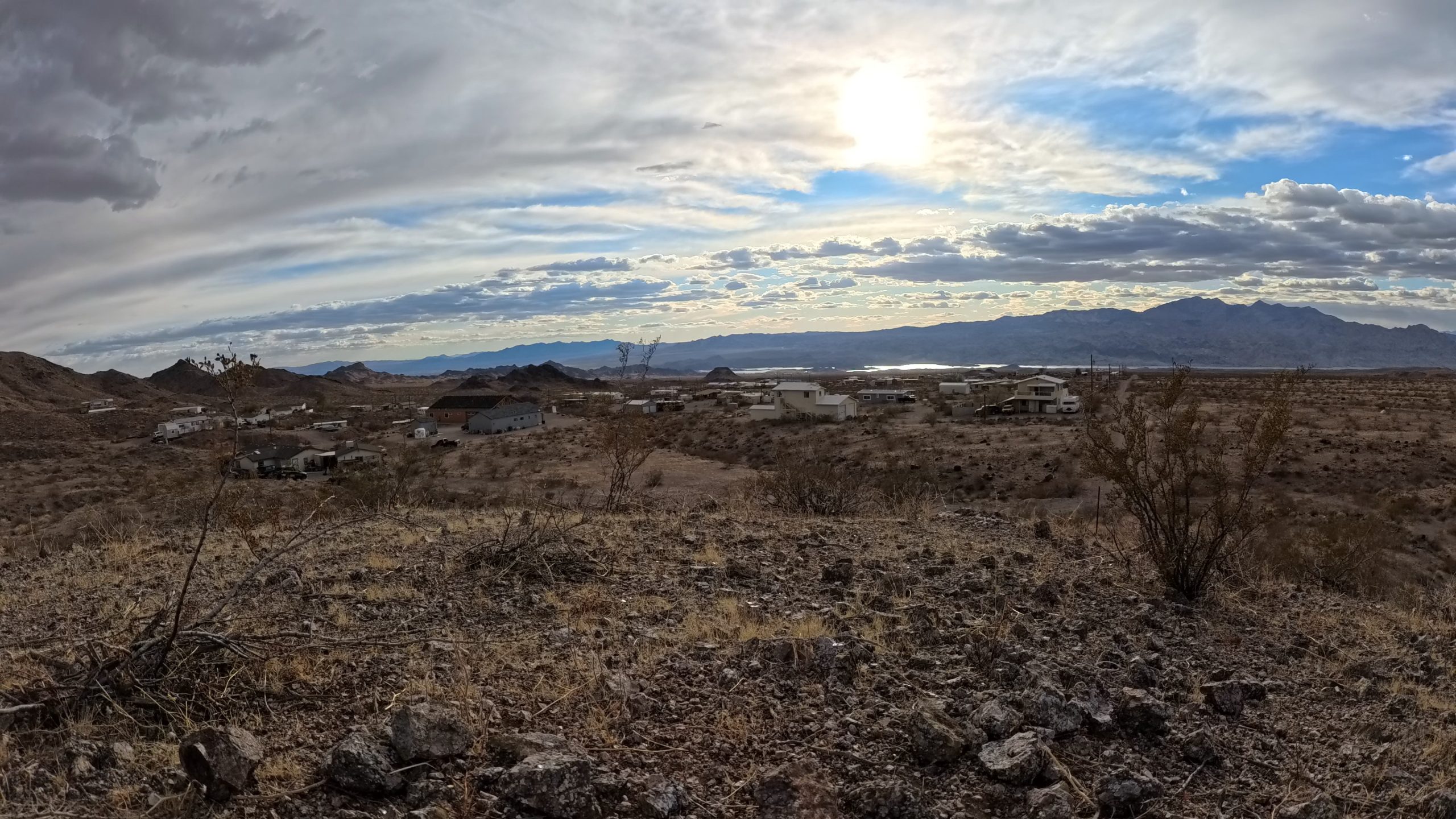
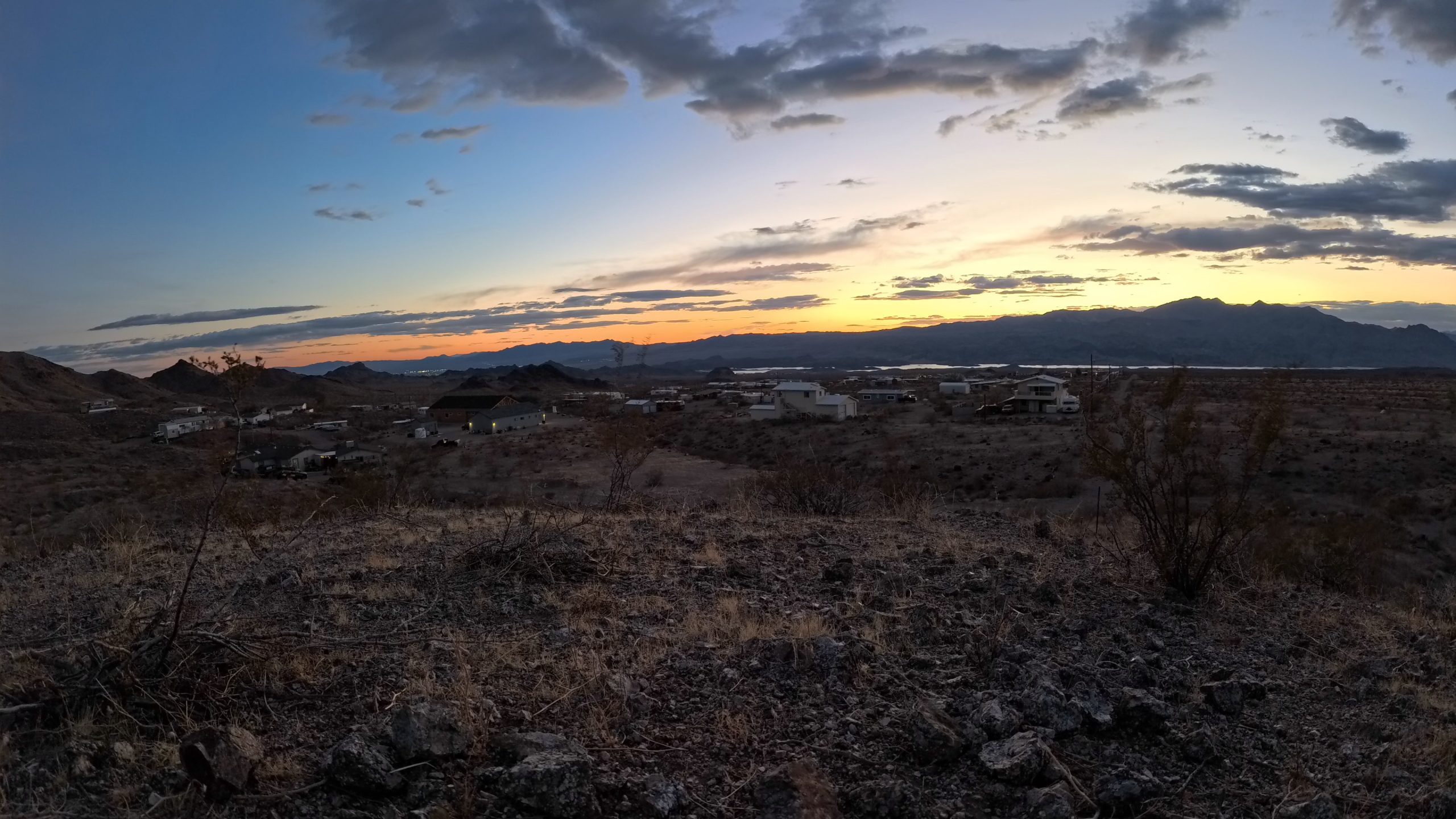
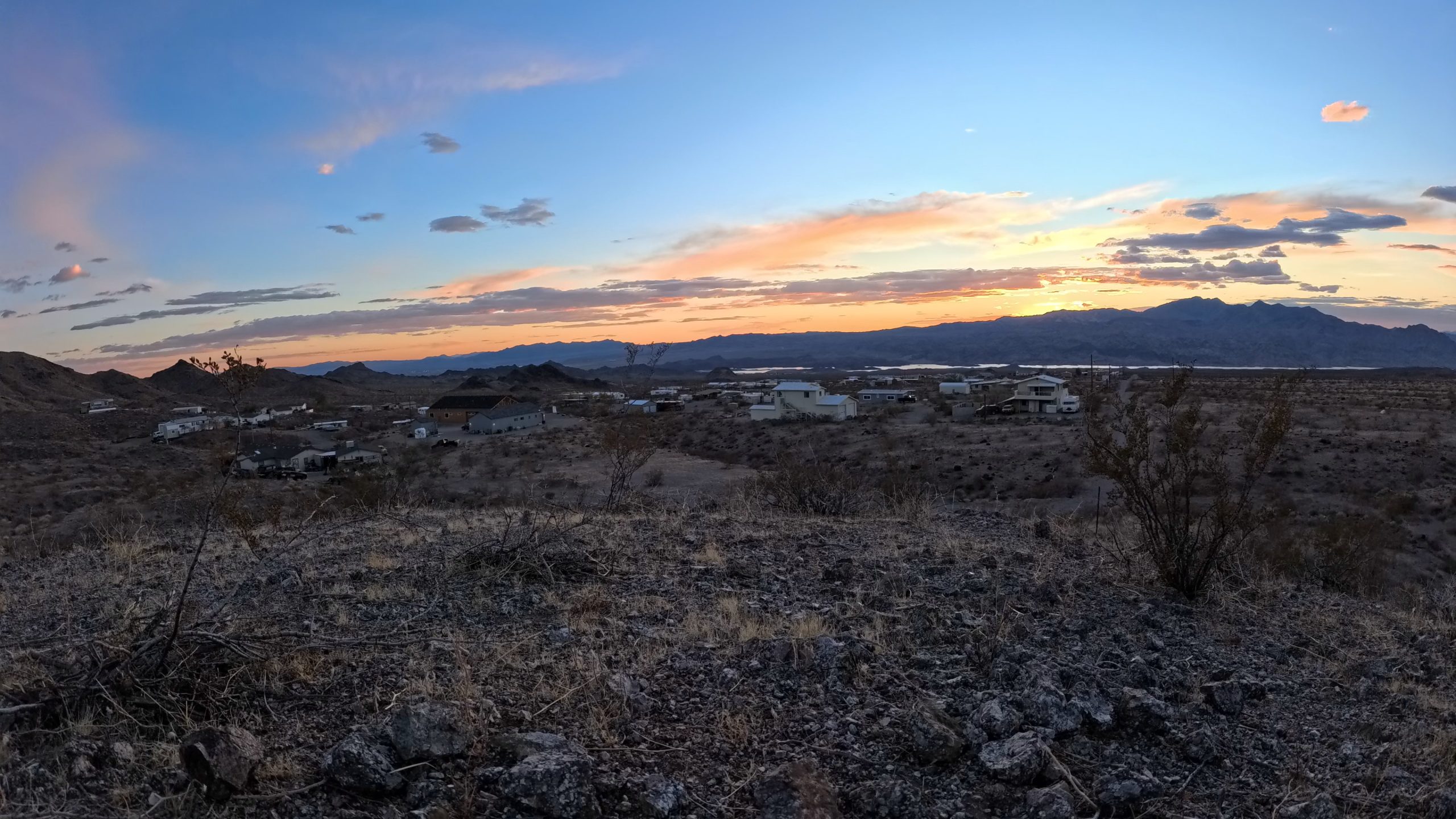
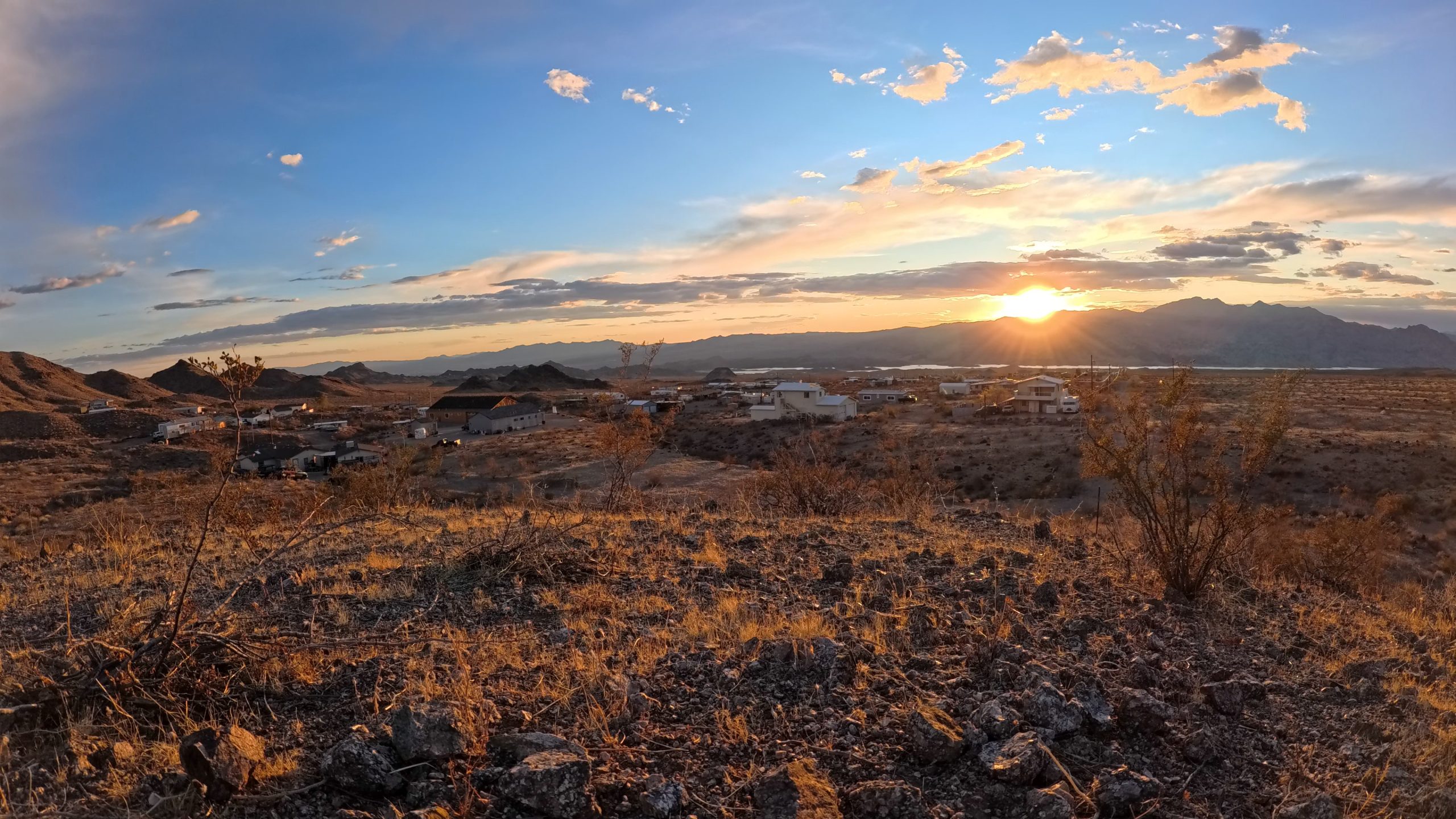
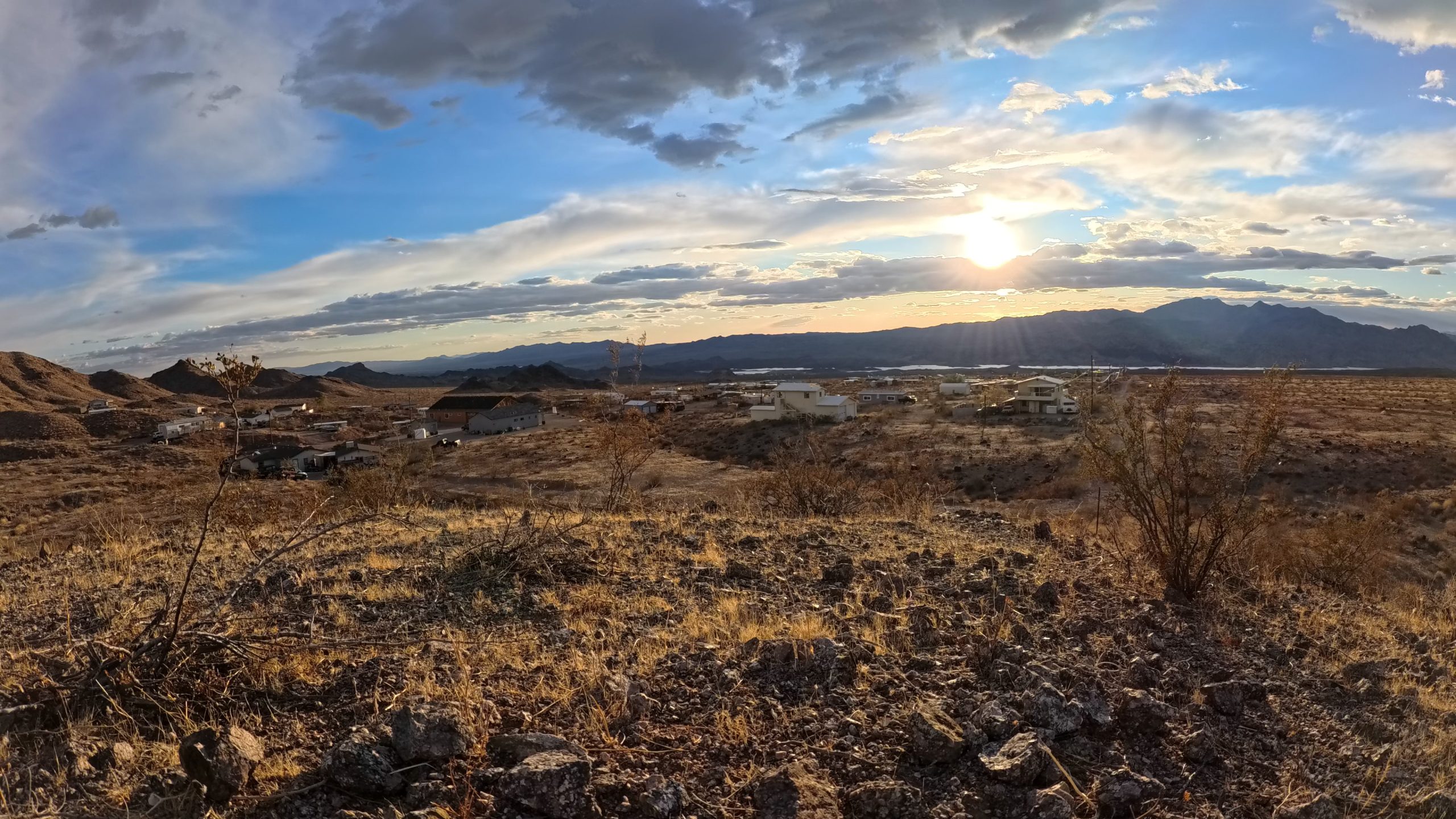
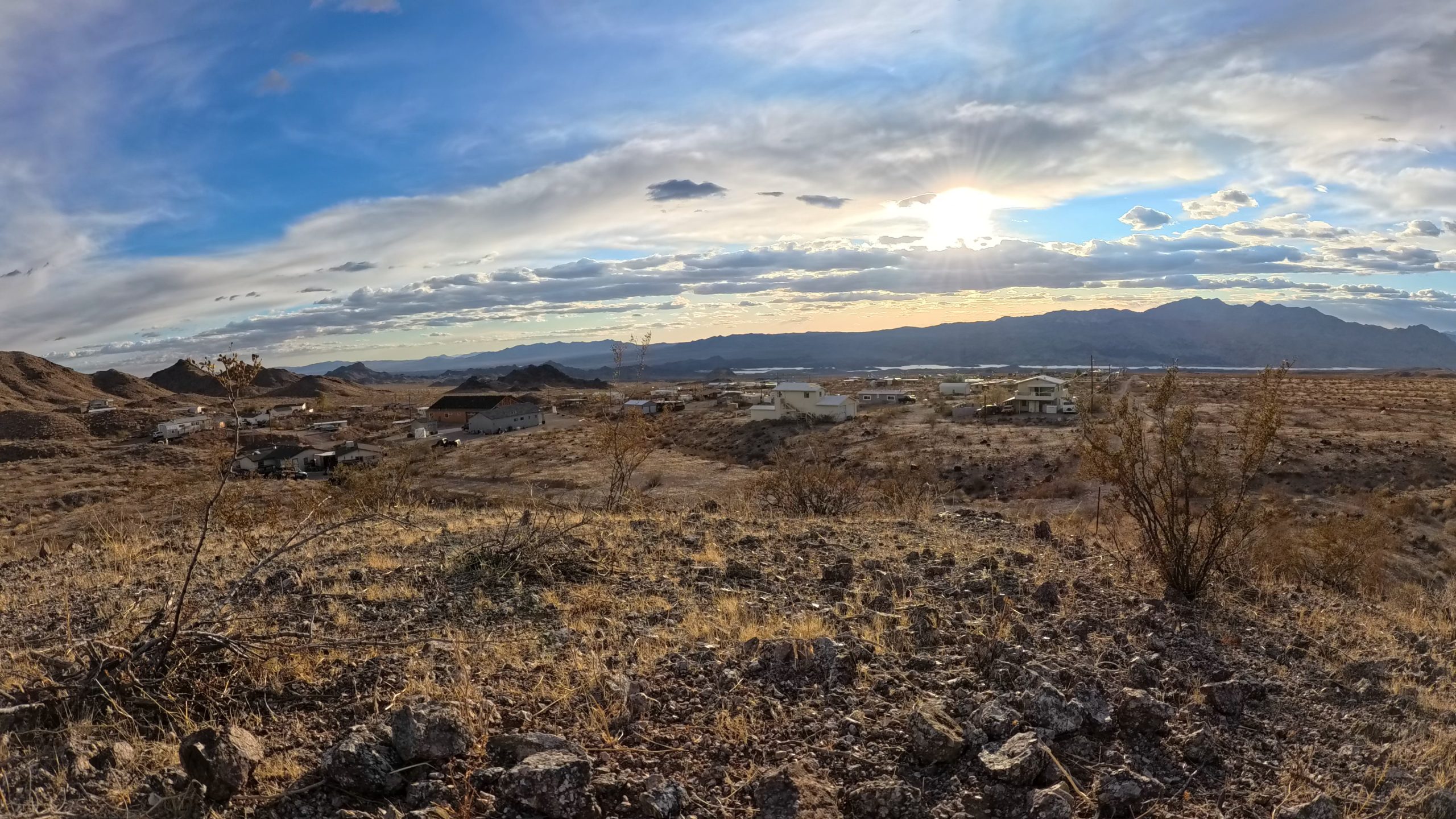
There's something about the way the light changes in the desert that reminds me of my childhood on the Kansas prairie. Different landscapes entirely, but that same vast sky, that same feeling of being small beneath an endless canvas of blue that slowly transforms into a masterpiece of orange, pink, and purple. From my perch here at Mohave Lake View Ranchos, with Spirit Mountain standing sentinel in the distance and Lake Mohave gleaming five miles below, I've found a new canvas for my old eyes.
Winter Refuge in the Desert
Paulette calls from inside our winter home, "Pat, don't forget your jacket! The sun's about to set and you know how quickly it gets chilly."
I smile, knowing full well she's right. After 43 years of marriage, Paulette still looks after me like she did when we were newlyweds. I grab my worn denim jacket—the one with the frayed cuffs that she's been threatening to throw away for the past decade—and my camera bag. Tonight feels special. The clouds are scattered just so, and the breeze carries that particular stillness that often precedes a spectacular sunset.
At 81, I've learned to read these signs. The desert speaks a language all its own, not unlike the tall grass whispers of my boyhood ranch in the Flint Hills. Different dialect, same soul.
We've been coming to Mohave Lake View Ranchos for five winters now, ever since we realized that while our mountain-top log home in Angel Fire, New Mexico, fed our souls with its magnificent views of Wheeler Peak and Eagle Nest Lake, the winter snow was becoming harder on our aging bones. Santa Fe was a fine compromise for a while—those glorious summers!—but when winter arrived, we found ourselves yearning for warmth.
This place—this stunning, rugged, surprising desert oasis—has become our winter sanctuary.
Mohave Lake View Ranchos: Desert Community with a View
Mohave Lake View Ranchos isn't on most tourist maps. It's a small, scattered community of homes perched on the Arizona side of the Colorado River, offering unparalleled views of Lake Mohave and the river valley below. Most folks here are like us—seekers of solitude, beauty, and a respite from harsh winters elsewhere.
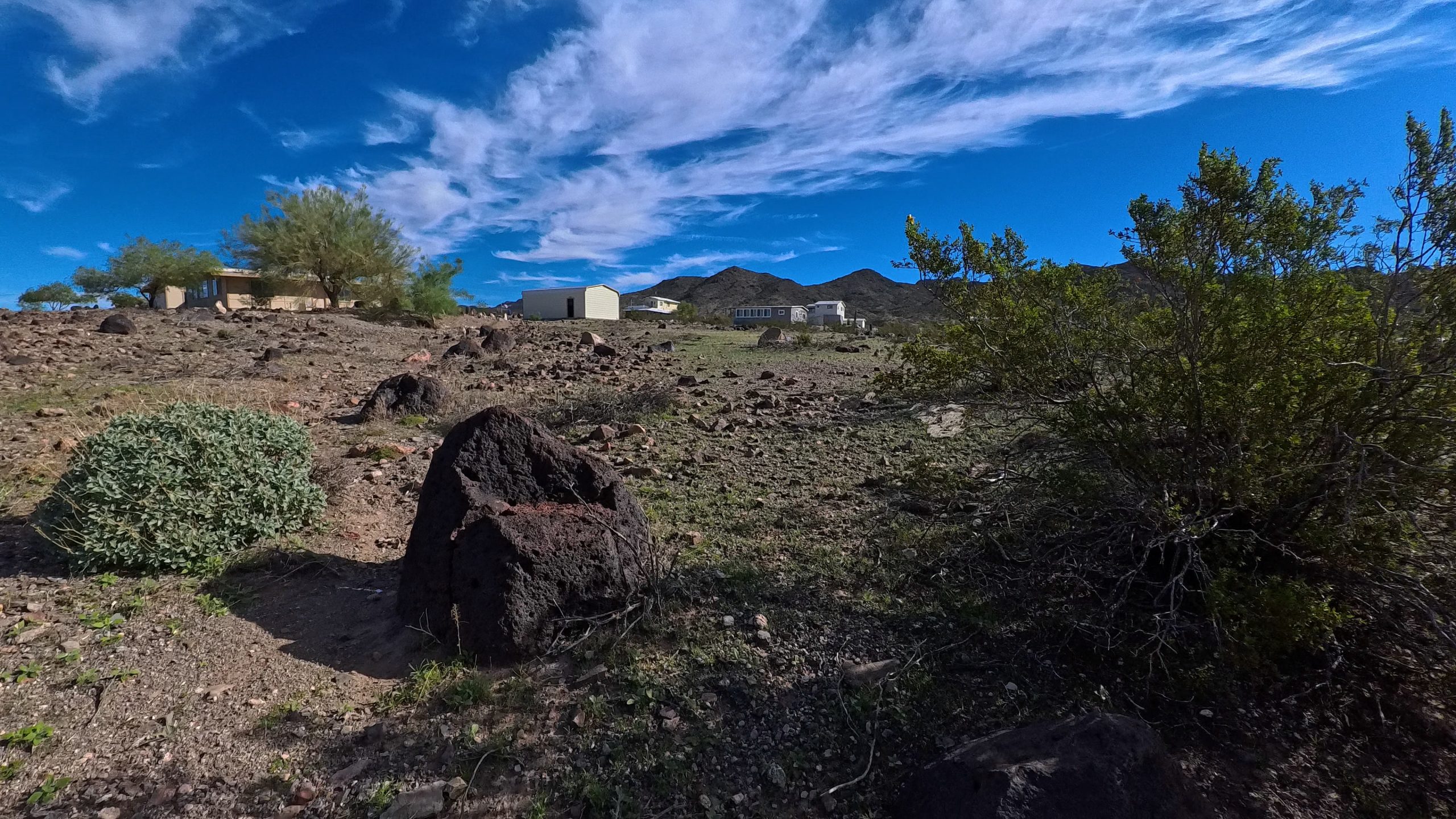
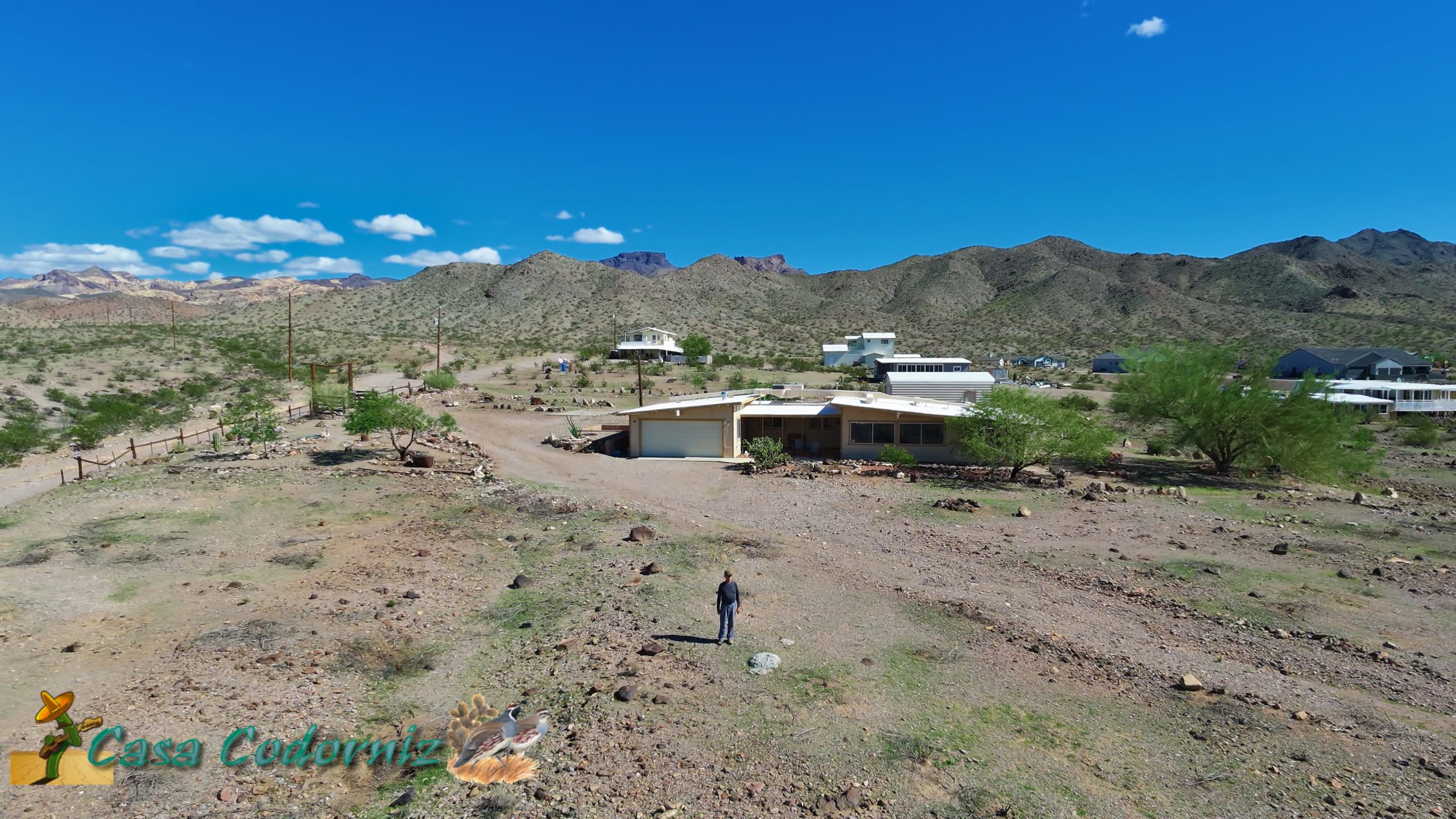
Our modest ranch-style home sits on two acres of desert landscape that we've carefully maintained to honor the natural environment. The previous owners had tried to force East Coast greenery onto this arid land—a folly I've seen repeated by many newcomers to the Southwest. Paulette and I knew better. We replaced thirsty non-native plants with desert marigolds, barrel cacti, and ocotillo that burst into crimson flame when they bloom.
The front porch faces west, perfectly positioned for sunset viewing and, if luck is with us, for spotting the magnificent Bald Eagles that nest along Lake Mohave during winter months.
I settle into my favorite couch that I splurged on at a Santa Fe artisan market three years back—and ready my camera. Tonight I'm using my Insta360 Ace Pro.
The Majesty of Spirit Mountain
From our elevation, Spirit Mountain dominates the western view. Known as Avikwame to the native Mojave people, this 5,639-foot peak isn't just a geographical landmark—it's sacred ground, believed to be the creation point of several Native American tribes.
I've photographed Spirit Mountain in every light imaginable over our twelve winters here, but it never ceases to humble me. Its jagged profile against the evening sky reminds me that these rocks have stood witness to millennia, making my eighty-three years seem like the blink of an eye.
"The coffee's ready when you want it," Paulette calls, interrupting my reverie. She appears at the door, her blonde hair catching the golden light, her smile as warm as the day I first saw it across a Cut n Shoot living room in 1983.
"Might be a while," I reply, gesturing toward the sky. "The clouds have been out near the Davis Dam, and I'm hoping they'll make their way back toward our side before dark."
She nods understanding, she knows me too well and settles into the chair beside mine. This is our ritual. Words aren't always necessary after four decades together.
Lake Mohave: Hidden Gem of the Colorado
Lake Mohave stretches below us like a blue ribbon woven through the brown and rust-colored landscape. Created by the Davis Dam, it's often overshadowed by its massive upstream neighbor, Lake Mead, but those of us who know better appreciate Mohave's less-crowded shores and pristine waters.
The 67-mile long reservoir marks the boundary between Nevada and Arizona, carving through sheer canyon walls in its northern reaches before opening into a wider basin near where we sit. From our elevation, I can see the boats—tiny specks from this distance—plying the waters for striped bass and rainbow trout.
The Sonoran Desert: Vibrant Ecosystem
As the sun dips lower, the Sonoran Desert around us comes alive with evening activity. A family of Gambel's quail scurries across our property, the male's distinctive topknot bobbing as he shepherds his covey toward evening shelter. Desert cottontails emerge from the protective shade of creosote bushes to begin their nocturnal foraging.
Many people imagine deserts as barren, lifeless places, but nothing could be further from the truth. The Sonoran Desert is one of the most biodiverse deserts in the world, home to more than 2,000 plant species and hundreds of animal species that have evolved remarkable adaptations to thrive in this challenging environment.
I've spent countless hours documenting these adaptations through my camera lens—the way a saguaro cactus expands like an accordion after rainfall, storing water for the dry months ahead; how the desert tortoise can go a year without drinking by metabolizing water stored in its bladder; the remarkable efficiency of a kangaroo rat, which can extract enough moisture from dry seeds to survive without ever drinking water.
Each adaptation tells a story of resilience and ingenuity that resonates with me more deeply as I age. Nature shows us how to persist, how to thrive even when conditions aren't ideal.
The Colorado River: Lifeblood of the Southwest
The fading light catches the distant ribbon of the Colorado River as it flows south from Davis Dam toward Laughlin, Nevada, and Bullhead City, Arizona. From our elevation, the river's importance to this arid region is starkly apparent—green vegetation follows its course like a verdant highway cutting through the browns and rust-reds of the desert.
Having grown up with the gentler waterways of Kansas, I still marvel at the Colorado—a river so vital it was worth fighting over, legislating over, and engineering to within an inch of its life. The 1922 Colorado River Compact that divides its waters among seven states stands as testament to its critical importance.
I've photographed the river in all seasons and all moods—from the churning rapids of the Grand Canyon to the placid stretches near our winter home. My favorite images capture the interplay of light on water, the way the river reflects the sky's changing colors.
"Pat, look! He's back and he's got a friend," Paulette interrupts my musings, pointing toward the lake again.
Sure enough, two Bald Eagles are now soaring in tandem, performing what appears to be an aerial dance against the deepening blue sky. I ready my camera again, adjusting settings to compensate for the fading light.
Outdoor Photography: Capturing Fleeting Moments
Photography became my passion later in life, after decades working as a laboratory contractor. The technical aspects came naturally to me—f-stops, shutter speeds, and ISO settings aren't so different from the calculations I'd performed throughout my engineering career. But learning to see, to anticipate the decisive moment as Cartier-Bresson called it, that took time and patience.
Now, as I track the clouds through my viewfinder, I'm grateful for those years of practice. I know instinctively how to capture their movement against the sky, how to frame them with Spirit Mountain in the background, how to wait for that perfect moment when wings extend fully and light catches the white head feathers.
Click. Click. Click.
"Got it," I murmur, reviewing the image on my camera's display screen. The clouds, perfectly in focus, soar above Lake Mohave with Spirit Mountain rising majestically behind them. The sunset paints everything in gold and amber tones.
"That's the one for the blog," Paulette says, leaning over to see. "Your followers will love it."
She's referring to the modest online following I've built over the past few years—fellow nature enthusiasts who enjoy my photographs and the stories I share about our southwestern adventures. What began as a way to keep in touch with grandchildren scattered across the country has become a community of like-minded souls who appreciate the natural world as much as I do.
Outdoor Videography: Moving Images of Wild Places
As if reading my thoughts, Paulette asks, "Are you going to switch to video? The light's getting perfect for that time-lapse you mentioned."
She's right. I carefully mount my camera on the tripod I've positioned on a hill behind our property and set it to capture a frame every five seconds as the sun continues its descent. Time-lapse videography has become another passion in recent years, allowing me to compress time and reveal patterns in nature invisible to the naked eye.
The clouds continue their patrol along the lake as my camera quietly clicks away.
"Home improvements never end," she quips. "Rather like us with the log house in Angel Fire."
I chuckle, remembering our ongoing projects at our mountain retreat. Even at our age, we can't seem to stop enhancing our surroundings.
The Perfect Light: Magic Hour in the Desert
Photographers call it "magic hour"—that golden time shortly after sunrise or before sunset when light takes on a warm, diffused quality that makes everything it touches extraordinarily beautiful. Here in the desert, with minimal air pollution and moisture, magic hour truly lives up to its name.
The landscape below us is transformed. Lake Mohave turns from blue to liquid gold. Spirit Mountain's rugged face glows amber and purple. The sparse clouds catch fire with pink and orange hues that no painter could replicate.
And through it all, the clouds continue their patient patrol, silhouetted now against the brilliant sky.
I've seen countless sunsets in my eight decades—from the rolling Flint Hills of my youth to the majestic mountains surrounding our Angel Fire home—but desert sunsets possess a quality all their own. Perhaps it's the clarity of the air, or the stark contrast between earth and sky, but there's something transcendent about witnessing day's end from this vantage point.
A Life Between Mountains and Desert
As darkness begins to envelop our desert refuge, Paulette touches my shoulder gently. "Coffee's getting cold, and these old bones need warming," she says.
I nod, gathering my camera equipment with the care of someone who knows both the value of good tools and the limitations of aging hands. The clouds have disappeared into the gathering darkness.
Inside our winter home, warm light spills from windows onto the desert floor. The space is modest compared to our log home in Angel Fire, but we've made it ours with southwestern Navajo Rugs collected from New Mexico weavers, and walls adorned with my framed photographs—visual memories of a life well-lived across the varied landscapes of the American Southwest.
Over steaming mugs of coffee (decaf now, another concession to age), we review the day's photographs on my laptop. The images are particularly striking—power and grace captured in pixels.
"You've got your blog post for the week," Paulette observes, pointing to the best of the series. "Your followers will be thrilled."
She's right. The combination of clouds, a rarity here, spectacular sunset, and the majestic backdrop of Spirit Mountain and Lake Mohave will resonate with the community of nature enthusiasts who follow my weekly posts.
Between Two Worlds
As I prepare to upload the images and craft the narrative that will accompany them, I reflect on the curious duality of our lives—winters here in the warm embrace of the Sonoran Desert, summers in the cool pine-scented air of our Santa Fe home in New Mexico.
We've created a life between extremes—mountains and desert, forest and cactus, snow and sunshine. Different as they are, both places speak to something deep within me, satisfying the same yearning for beauty and solitude that I first recognized as a boy wandering the tallgrass prairies of the Flint Hills of Kansas.
Tomorrow, if weather permits, I'll rise before dawn and position myself closer to the lake, hoping to capture images of the eagles fishing in the early morning light. At 81, I'm well aware that each sunrise is a gift not guaranteed, each sunset a blessing to be savored.
But tonight, I'm content to sit beside Paulette, sharing coffee and conversation as darkness settles over Mohave Lake View Ranchos, grateful for this winter haven where eagles soar above desert beauty, and each day offers new wonders to capture through my lens.
0 Comments