
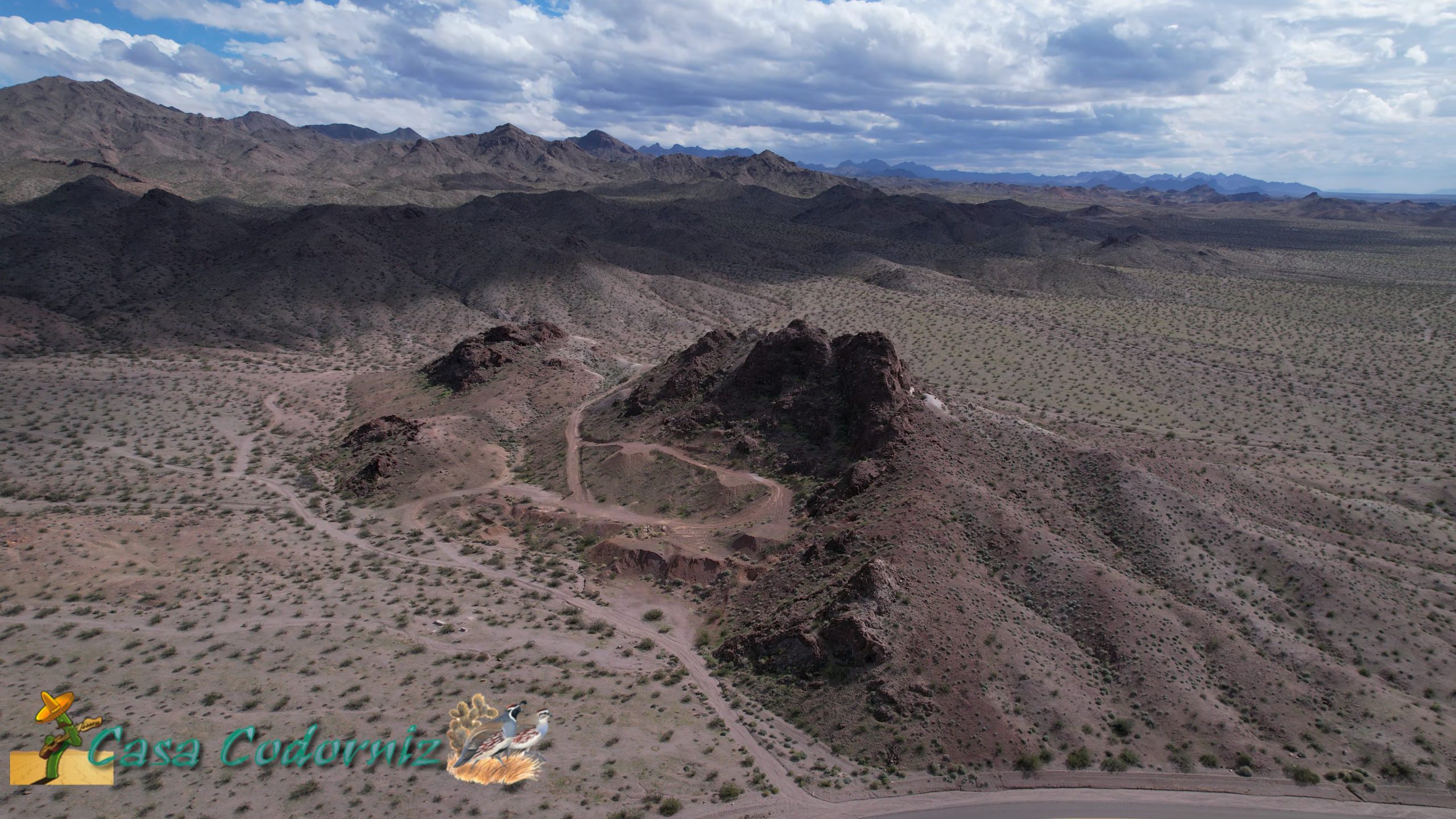
Diverse topography, complex geology, and distinctive plant communities characterize the Mojave Desert region. The desert covers 152,000 km2 of eastern California, southern Nevada, the southwest corner of Utah, and northwest Arizona (fig. 1). On the west and southwest, the Mojave Desert is bounded by the Sierra Nevada and the San Gabriel and San Bernardino Mountains. These imposing mountains alter the prevailing westerly winds and intercept moisture derived from the Pacific Ocean, producing a rain-shadow effect and arid conditions on the lee side of the mountains. The regional climate and topography of the Mojave (Rowlands, 1995) strongly influence the distribution and abundance of its diverse and fragile desert plant communities.
The annual precipitation cycle shows two distinctive patterns that approximately divide the region along the 117°W meridian, which is near Barstow, California. A biseasonal pattern prevails at 90% of the weather stations used to collect data in this study that lie east of 117°, whereas a winter-dominant pattern is typical of 70% of the stations lying west of 117° (fig. 2). In both cases, May and June are consistently dry, accounting for less than 5% of annual rainfall. October through April precipitation of the winter dominant pattern accounts for 82% of the annual total, whereas the biseasonal pattern accounts for 66%. During the warm months of July through September, 13 and 29% of the annual total falls in the winter-dominant and biseasonal patterns, respectively.
Cool-season precipitation is the most important and extensive source of rain in the desert region. Rainfall is widespread and of relatively long duration during the cool season. Warm-season precipitation results largely from convective precipitation in the form of thunderstorms. Although rather infrequent, the most dramatic precipitation source is tropical cyclones and hurricanes (often referred to as chubascos) that drift across the region from off the coast of Baja California. These typically occur late in the warm season and are accompanied by widespread and severe flash flooding. The extent and magnitude of warm-season rainfall strongly influences the distribution of desert vegetation. The relative abundance of cacti, many yuccas, agaves, and agave-like plants is much greater where warm-season rainfall is abundant (Rowlands, 1995).
Daily precipitation amounts from 52 weather stations in the Mojave Desert region were the raw data used in the analyses. Precipitation time series were developed from digital and archival records. The former are available commercially and the latter are available on microfiche from National Oceanographic and Atmospheric Administration (NOAA). None of the stations have data for the entire 1893–2001 period. Average annual precipitation in the Mojave calculated with data from the 52 stations (fig. 1) ranges from 34 to 310 mm/yr, with a long-term average of 137 mm/yr. The driest year was 1953, and 1941 and 1983 were the two wettest (fig. 3). Long-term annual precipitation varied substantially during the 20th century. Four multidecadal precipitation regimes are apparent: 1893–1904, 1905–1941, 1942–1975, and 1976–1998. The choice of limiting dates for these regimes is somewhat subjective; the mid-century dry conditions in the desert region may have begun in 1946. Regardless of the exact dates, the mid-century was clearly dry and was sandwiched between two wetter episodes. The period 1976–1998 was the wettest of the 20th century, broken only by the relatively short, intense drought of 1989. Droughts and dry conditions are distinguished from the two wet episodes by the sparse number of stations reporting precipitation substantially above normal (fig. 3).
These long-term variations are largely contemporaneous with well-known droughts elsewhere in the Southwest, specifically an 11-year drought from 1893–1904 and a mid-century dry spell from 1942–1977. The early part of the mid-century dry regime (1942–1956) is recognized as a drought throughout the Southwest (Gatewood, 1962). In the Mojave Desert region and adjacent Colorado Plateau (fig. 1), precipitation increased somewhat after 1953 (1956 in the Colorado Plateau; Hereford and others, 2002), although it did not reach the levels of the early and late 20th century. Statistical analysis shows that average precipitation during the early and mid-century dry conditions was significantly less than the two wet episodes.
Precipitation in the Mojave Desert region varied substantially during the past century. This multidecadal variability has implications for ecosystem processes and land management, because precipitation strongly affects the recovery rates from natural and human disturbances (for example, the results of studies of floral and faunal population dynamics and the affects of grazing are dependent on the prevailing climate). Inferences and projections based on these studies may not be valid or may need adjustment or reappraisal if applied during a different, potentially drier climate regime.Recent trends in Mojave Desert precipitation and the PDO suggest that climate of the region may become drier for the next 2 to 3 decades in a pattern that could resemble the mid-century dry conditions. Although there are many uncertainties and assumptions, including using a single index (PDO) to predict multidecadal climate variability (Schmidt and Webb, 2001; Gedalof and others, 2002), it is important to consider the potential affects of climate variation on the human and natural resources of the region. Water resources were heavily affected during the early part of the 1942–1977 dry conditions, and the population of the region has increased greatly since the mid-1950s, substantially increasing the demand for water in an arid region and creating the possibility of severe or catastrophic consequences if such a drought were repeated.
The work of USGS and other scientists is leading to a better understanding of the past and probable future climate of the Mojave Desert region. This work is only part of USGS efforts to provide information critical to creating policies for the informed management of land, energy, and other resources. These efforts are also helping to protect lives and property from drought, landslides, and other natural hazards.
0 Comments